
 EN
EN
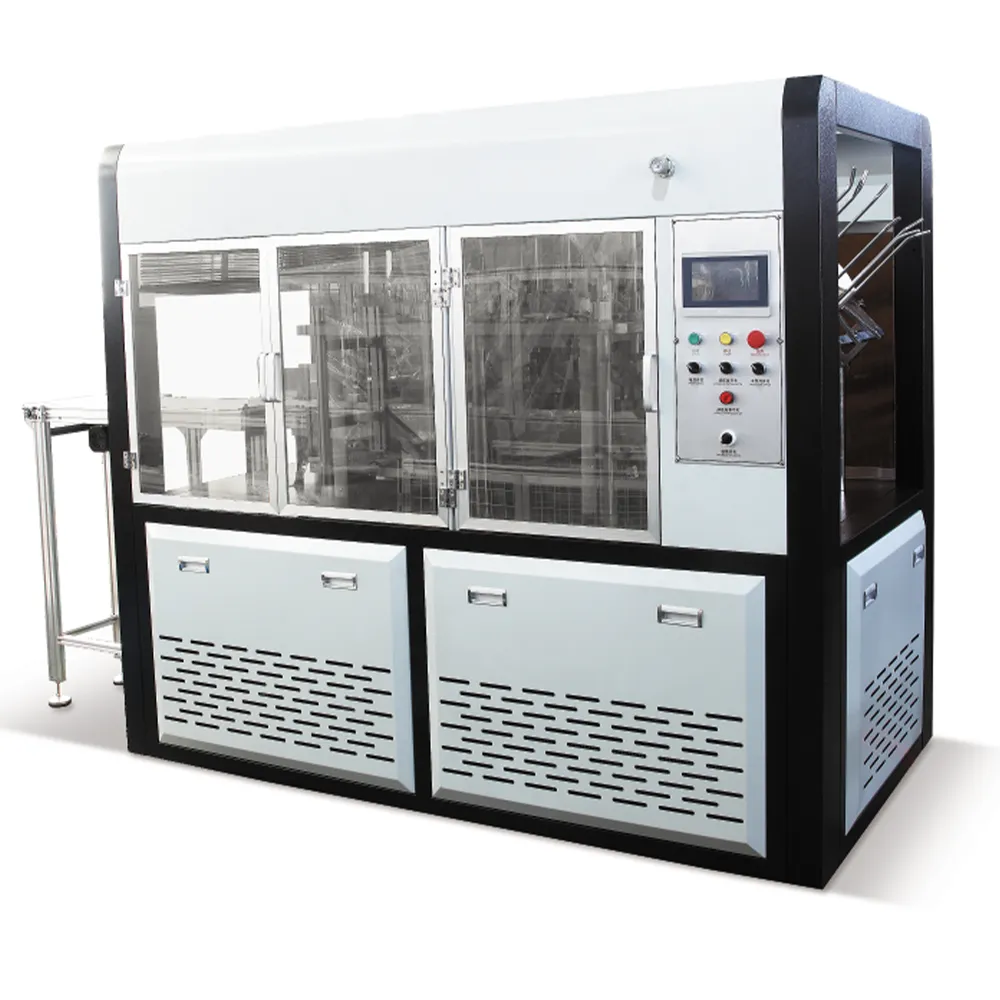
Glue Adhesion Failures in Paper Sticking Machines
Root Causes: Insufficient Glue Application and Substrate Incompatibility
When paper sticking machines have problems with adhesion, there are usually two main culprits working together: bad glue application levels and substrate compatibility issues. Not enough glue means weak bonds between sheets, but too much creates messy overflows that stain surfaces and ruin how stacks hold together. The substrate problem happens when the adhesive just doesn't work right with the kind of paper it's being applied to. Take water-based cold glues, for instance, they simply won't stick properly to polyethylene-coated boards because the glue can't penetrate the surface well enough. Environmental factors make things even worse in real-world settings. High humidity can double drying times, sometimes pushing them past 40% longer than normal, while cold environments below 15 degrees Celsius really mess with the chemical process needed for strong bonds. Getting the glue viscosity and amount just right matters a lot, particularly with lighter weight papers that tend to buckle or warp when exposed to thick, heavy formulations.
Cold Glue vs. Hot Melt Performance on Coated Board: A Comparative Analysis
Selecting the right adhesive for coated board demands matching performance attributes to production requirements:
| Factor | Cold Glue | Hot Melt |
|---|---|---|
| Adhesion Strength | Moderate (fails on PE/glossy coatings) | High (reliably bonds PE, metallized, and glossy substrates) |
| Drying Time | 2–5 minutes (highly sensitive to RH and temperature) | <10 seconds (environmentally stable, no open-time dependency) |
| Viscosity Control | Critical—thin papers prone to deformation | Less deformation risk; rapid solidification minimizes dwell-related distortion |
| Coated Board Suitability | Limited to uncoated, unwaxed, or lightly sized stocks | Universally effective across coated, laminated, and synthetic substrates |
Hot melt adhesives really shine when it comes to speed, consistency, and working with different materials, which is why most folks in the business go for them in large-scale operations involving coated boards. Cold glue still works fine for slower production runs on uncoated materials, though there are some catches. The environment needs to be tightly controlled and processes must be checked regularly to ensure everything sticks properly. Looking at actual shop floor data, companies report around a 30 percent reduction in problems related to poor adhesion when they match their adhesive choices exactly to what the material's surface can handle and the kind of coating applied. Getting this right makes all the difference between smooth operations and constant quality issues down the line.
Paper Deformation and Dimensional Instability During Sticking
Moisture-Induced Curl, Tension Skewing, and Environmental Control Best Practices
Paper sticking operations often run into problems with dimensional changes mainly because cellulose fibers absorb moisture so readily. When different parts of the paper surface take in varying amounts of humidity, it causes uneven swelling across the sheet. This typically happens worse when adhesives aren't applied evenly or coatings are only on one side. The result? Sheets bend towards whichever side is drier, messing up how accurately they feed through machines and where folds end up registering properly. Things get even trickier with tension issues. Feed rollers that aren't aligned correctly or set too tight create sideways pressure as paper moves along. This kind of stress messes with the grain direction particularly bad in materials like long grain stock or thin lightweight papers that manufacturers commonly work with in production environments.
To stabilize paper dimensions:
- Maintain ambient conditions at 35–50% relative humidity and 16–24°C
- Acclimate paper rolls in the production area for ≥24 hours before processing
- Calibrate tension controls monthly—and verify with tension meters—not just visual inspection
- Install real-time RH monitoring near critical zones (e.g., glue station, folding unit)
These measures reduce curl-related misfeeds by 72% and cut alignment-related jams by over half in high-speed lines. Crucially, coated papers exhibit lower moisture permeability and altered hygro-expansion coefficients versus uncoated grades—so environmental protocols must be substrate-specific, not one-size-fits-all.
Folding, Creasing, and Alignment-Related Defects in Paper Sticking Machines
Misaligned Creasing Rules, Fiber Damage, and Precision Calibration Protocols
When creasing rules aren't properly aligned, they become one of the main culprits behind all sorts of folding problems. We see crooked folds appearing regularly, along with creases that vary in depth from spot to spot, plus those annoying stacking issues later on in production. If there's too much space between the rule and anvil, what happens is we get these weak creases that barely hold together. But go the other way and make the gap too small? That creates way too much pressure on certain areas, which crushes the fibers right through and leaves cracks on the surface material. This kind of damage really affects how sturdy the final product ends up being, and manufacturers know this well because it means higher rejection rates across most packaging operations today.
Precision calibration mitigates these risks through evidence-based practices:
- Inspect creasing blades and anvil strips weekly for wear, nicks, or debris buildup
- Adjust pressure incrementally using torque-controlled tools—not guesswork—based on paper caliper and fiber direction
- Validate settings with test runs on representative substrates before full production launch
Environmental humidity control remains integral: fluctuations above 55% RH soften paper fibers, increasing susceptibility to over-creasing; below 35%, brittleness raises tear risk. Scheduled maintenance—including quarterly anvil reconditioning and biannual rule replacement—reduces creep-related drift and sustains ±0.2 mm crease tolerance across shifts.
Feeding, Jamming, and Sheet-Handling Failures in High-Volume Paper Sticking Machine Operations
Static Buildup, Vacuum Loss, and Sheet Separation Optimization
Most feeding problems in those big paper sticking machines come down to three main culprits: static electricity buildup, worn-out vacuum systems, and poor sheet separation issues, particularly when dealing with coated papers, slick surfaces, or lightweight stock materials. When the air gets really dry below around 40% relative humidity, static charges start building up and sheets just stick together, leading to all sorts of headaches like double feeds and paper jams that throw everything off alignment. According to some recent research across print shops last year, almost a third of production stoppages were actually caused by this static cling problem. To combat these issues, many facilities install those ionizing bars right where the paper feeds into the machine. Keeping the workshop humidity somewhere between 45 and 55 percent also helps a lot since this sweet spot lets static charges dissipate naturally without making the paper curl up on itself afterwards.
Vacuum loss—often from worn seals, clogged filters, or degraded hoses—reduces suction grip by up to 60%, directly contributing to skewed feeds and partial lifts. Leading OEMs mandate daily visual checks of vacuum ports and monthly pressure calibration using calibrated gauges—not reliance on machine dashboards alone.
For robust sheet separation, three adjustments are non-negotiable:
- Tune separator wheel friction to match substrate basis weight and surface finish
- Deploy air-assisted feed systems for PE-coated or metallized stocks to break surface tension
- Align feed rollers with laser-guided precision to eliminate lateral drift
Combining anti-static protocols with scheduled vacuum maintenance recovers 90% of lost throughput. Adding automated sheet joggers pre-loading ensures consistent edge registration—reducing sensor-triggered stops caused by skewed stacks. Always validate photoelectric and ultrasonic sensor calibration during troubleshooting; even 0.5 mm misalignment multiplies jam frequency in high-speed sequences.
FAQs
-
Why does glue fail to adhere properly in paper sticking machines?
Glue fails to adhere properly when there's insufficient glue application or substrate compatibility issues. The moisture content in the environment can exacerbate these problems.
-
What are the advantages of using hot melt adhesives over cold glue?
Hot melt adhesives offer faster drying times, greater adhesion strength, and are effective on multiple substrates compared to cold glues, making them preferable in large-scale operations with coated boards.
-
How does moisture affect paper deformation during processing?
Moisture causes dimensional instability as cellulose fibers absorb it unevenly, leading to curls and misfeeds. Proper environmental control can mitigate these effects.
-
How can feeding and sheet handling issues be minimized?
Minimizing static buildup, maintaining vacuum efficiency, and optimizing sheet separation systems are crucial for reducing feeding and handling issues in high-volume operations.