
 EN
EN
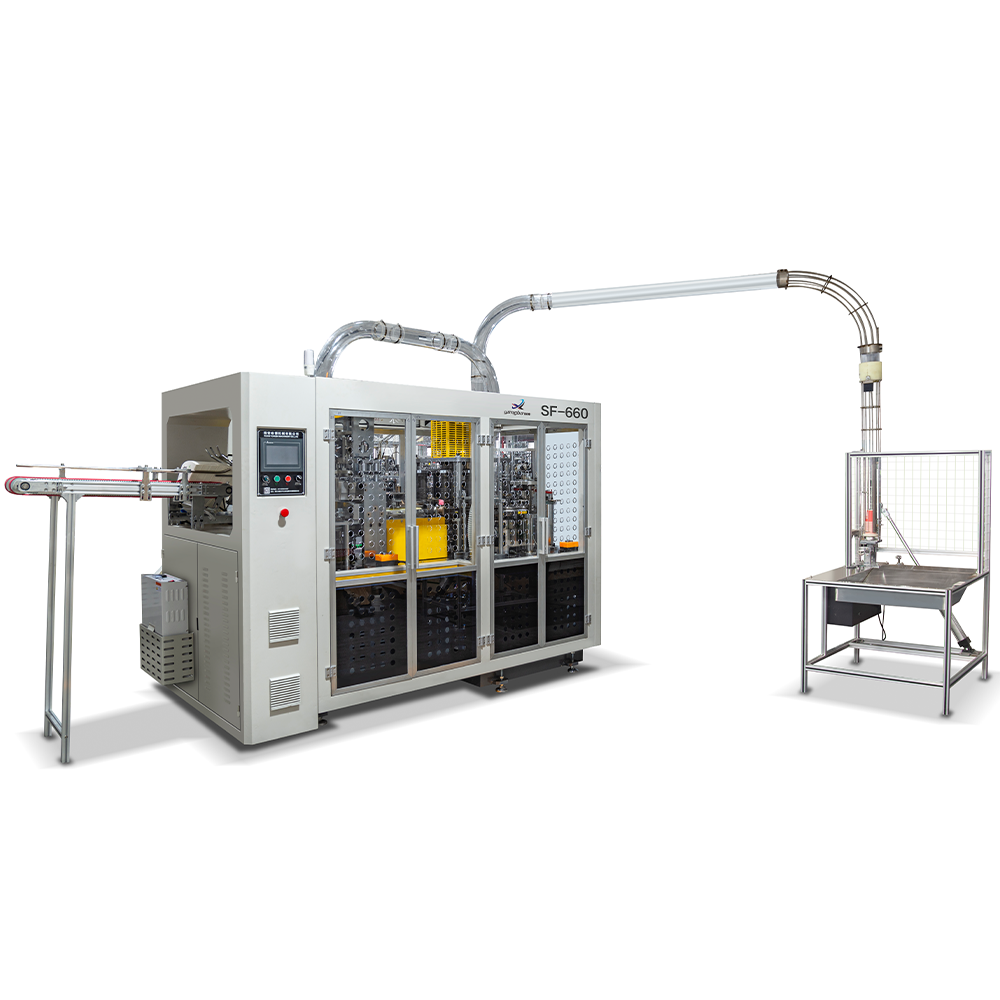
Sealing quality is a critical factor determining the usability of disposable paper cups—poor seals can lead to liquid leakage, product waste, and even customer complaints. For manufacturers relying on efficient production, resolving sealing defects in a paper cup machine promptly is essential to maintaining productivity and product standards. Wenzhou Bonjee Machinery Co., Ltd., a high-tech enterprise specializing in paper packaging equipment, integrates advanced technologies (such as full servo motor drives and patented mold designs) and international certifications (CE, SGS) into its paper cup machine models (e.g., BJ-SPT500Y, BJ-CHA). Leveraging Bonjee’s equipment advantages and industry expertise, this article details practical troubleshooting steps for sealing defects, making complex technical solutions easy for ordinary operators to understand and implement.
Check and Optimize Heat Sealing Temperature Parameters
Inconsistent or incorrect heat sealing temperature is one of the most common causes of sealing defects. If the temperature is too low, the PE film on the paper cup cannot fully melt, resulting in weak or incomplete seals; if too high, the film may burn or deform, damaging the seal structure.
Bonjee’s paper cup machine is equipped with an intelligent temperature control system, powered by international brand electrical components (Schneider, Siemens) to ensure temperature stability (actual temperature deviation ≤±5℃). To troubleshoot: First, refer to the material specifications (e.g., PE film thickness 8-12μm) and Bonjee’s equipment manual to confirm the recommended temperature range (typically 150-180℃ for cup body seams, 160-200℃ for cup bottom bonding). Second, use the machine’s touchscreen to check if the set temperature matches the actual displayed value—if there is a discrepancy, calibrate the temperature sensor (Bonjee recommends weekly calibration to maintain accuracy). For example, the BJ-SPT500Y model has a built-in temperature self-diagnosis function that alerts operators to sensor malfunctions, avoiding prolonged temperature-related defects.
Ensure Uniform Sealing Pressure Distribution
Uneven pressure during the sealing process often leads to partial seal failure (e.g., tight seals on one side and loose seals on the other). This issue usually stems from unstable pressure output or misadjusted pressure settings in the sealing mechanism.
Bonjee’s paper cup machine addresses this with full servo motor drive technology, which provides continuous and uniform pressure output, unlike traditional hydraulic systems that may experience pressure fluctuations. To troubleshoot: First, access the machine’s parameter interface to check if the sealing pressure (0.3-0.5MPa for cup seams, 0.4-0.6MPa for cup bottoms) matches Bonjee’s recommended values for the current cup size. Second, inspect the pressure roller or mold for signs of wear—Bonjee’s patented mold designs (e.g., “3D Carton Forming Device” with Patent No. ZL 2024 2 3031812.0) use high-wear-resistant materials to maintain pressure uniformity over long-term use. If pressure unevenness persists, contact Bonjee’s technical team for on-site adjustment, as their equipment’s modular design allows for quick pressure mechanism maintenance.
Clean and Maintain Sealing Molds Regularly
Contamination or residue buildup on sealing molds is a hidden cause of sealing defects. Adhesives, paper fibers, or PE film scraps can accumulate on mold surfaces over time, creating gaps between the mold and the paper cup, which break the seal.
Bonjee’s paper cup machine is designed for easy mold maintenance—sealing molds feature a smooth, non-stick coating and are detachable without complex tools. To troubleshoot: Perform daily cleaning after each production shift: power off the machine, wipe the mold surface with a lint-free cloth dipped in food-grade cleaning agent (avoid abrasive materials that scratch the coating), and use compressed air to blow away debris in mold crevices. Additionally, inspect the mold for micro-cracks or deformation monthly—Bonjee’s molds have a service life 30% longer than industry averages, but timely replacement of worn molds (available through Bonjee’s after-sales service) prevents persistent sealing issues.
Validate Raw Material Compatibility and Quality
Low-quality or incompatible raw materials (paper and PE film) can undermine even the best paper cup machine’s sealing performance. For example, PE film with uneven thickness may melt inconsistently, while paper with high water absorption (Cobb value >15g/m²) can weaken the bond between the paper and film.
Bonjee provides one-stop solutions for raw material selection as part of its service, guiding customers to choose materials that match their paper cup machine models. To troubleshoot: First, check the PE film’s specifications—ensure it has no pinholes or bubbles and a thickness of 8-12μm (optimal for Bonjee’s heat sealing systems). Second, test the paper’s water resistance: if the paper absorbs too much moisture, store it in a dry, ventilated warehouse (Bonjee recommends controlling warehouse humidity at 40%-60%). If sealing defects persist after material checks, use Bonjee’s sample testing service to confirm whether the raw materials meet the machine’s requirements, avoiding misdiagnosis of equipment issues.
Calibrate Mold Alignment and Equipment Precision
Mold misalignment (e.g., cup body mold and bottom mold not perfectly aligned) causes uneven contact between the mold and the paper cup, resulting in partial sealing failure. This issue is often overlooked but critical for consistent seal quality.
Bonjee’s paper cup machine comes with a precision calibration guide and dedicated alignment tools to simplify this process. To troubleshoot: First, follow Bonjee’s manual to calibrate the mold monthly—use a feeler gauge to check the gap between the sealing mold and the cup blank (should be ≤0.1mm). Second, utilize the machine’s real-time monitoring system: models like BJ-CHA feature sensors that detect mold misalignment and trigger alerts, preventing continuous production of defective cups. For severe misalignment (e.g., due to transportation or heavy use), Bonjee’s on-site technical team can perform professional calibration, leveraging the company’s patented “Carton Forming Machine” (Patent No. ZL 20222 1178037.X) technology to restore precision.
Summary of Troubleshooting Workflow
When facing sealing defects, follow this step-by-step workflow with Bonjee’s paper cup machine: 1) Check temperature settings and calibrate sensors; 2) Verify pressure uniformity and adjust servo-driven pressure mechanisms; 3) Clean and inspect molds for wear; 4) Validate raw material quality and compatibility; 5) Calibrate mold alignment using Bonjee’s tools. By combining the equipment’s inherent advantages (intelligent controls, durable molds, servo drives) with these targeted steps, manufacturers can quickly resolve sealing issues, reduce waste, and ensure stable production.