
 EN
EN
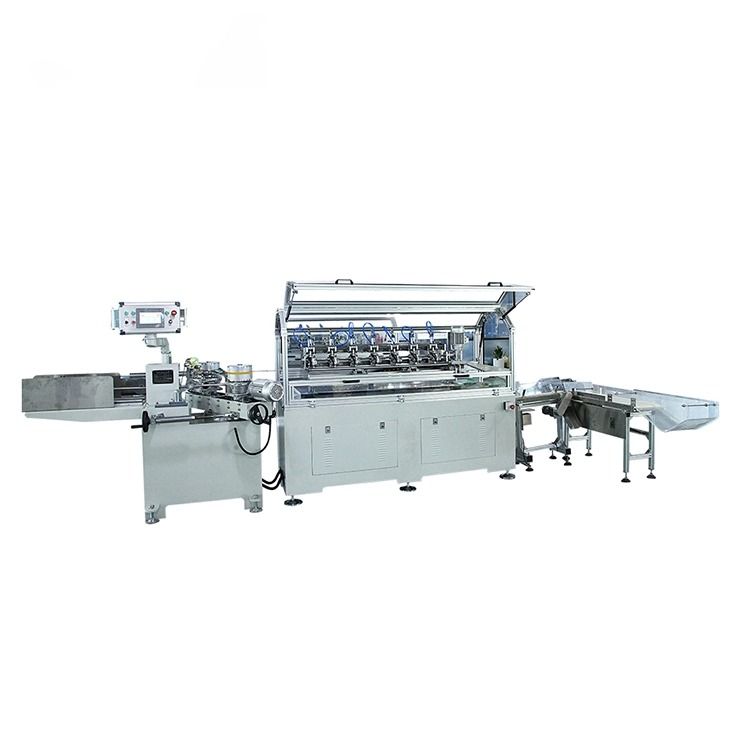
In the rapidly evolving landscape of disposable paper product manufacturing, efficiency is no longer just a goal—it is the foundation of competitiveness. As global markets shift away from plastics, the demand for paper straws has surged, putting immense pressure on manufacturers to increase output without compromising quality. For any business operating in this sector, understanding how to achieve a significant production speed improvement for paper straw making machines is essential to scaling operations and meeting market needs. A modern paper straw making machine is a complex piece of equipment, and unlocking its full potential requires a systematic approach to its mechanical, electrical, and operational systems.
The Core Challenge: Balancing Speed with Quality
For many manufacturers, the primary bottleneck in scaling up production lies in the misconception that speed inherently leads to compromised quality. However, with advanced engineering, this trade-off is no longer necessary. A high-performance paper straw making machine integrates precision mechanics with intelligent controls to ensure that as the cycles per minute increase, the structural integrity of each straw remains flawless. The goal is to achieve high-speed operation while maintaining consistent glue application, precise winding, and a perfect final seal. By investing in a machine built with superior components, such as those from trusted brands like Schneider and Siemens—partners of advanced manufacturers like Bonjee—businesses can eliminate the common issues of jamming and deformation that plague lower-quality, slower equipment.
Optimizing the Feeding System for Uninterrupted Operation
The foundation of any speed improvement strategy begins at the input stage: the feeding of raw paper. Inefficient feeding systems cause frequent stoppages, which are the primary enemies of high-speed production. A state-of-the-art paper straw making machine utilizes a servo-driven feeding mechanism that provides precise tension control and rapid splicing capabilities. This allows the machine to operate at higher speeds continuously, as the material flow is never interrupted. For a business looking to boost output, ensuring that the feeding system can handle large-diameter rolls with automatic alignment is crucial. This minimizes downtime for roll changes and ensures that the machine’s high-speed capabilities are utilized to their fullest potential, directly contributing to a measurable production speed improvement for paper straw making machines.
Advanced Multi-Lane Configurations and Modular Design
One of the most effective ways to dramatically increase output is through the implementation of multi-lane technology. A single paper straw making machine can be configured with multiple lanes, effectively multiplying the output per square foot of factory space. This modular approach allows manufacturers to scale production incrementally; as demand grows, additional lanes can be activated without purchasing an entirely new machine. This design philosophy is central to modern, high-efficiency equipment. By integrating multiple production lanes into a single footprint, manufacturers can achieve output rates that were previously unattainable with single-lane models. This not only improves speed but also reduces labor costs per unit, as one operator can oversee a higher volume of production.
Intelligent Heat Sealing and Forming Technology
The speed of production is often dictated by the most time-consuming processes: forming and sealing. In high-speed applications, the heating elements and sealing stations must respond instantly to maintain cycle times. Modern paper straw making machines employ advanced temperature control modules, often utilizing precise PID (Proportional-Integral-Derivative) controllers, to ensure that the heat is applied exactly where and when it is needed. This prevents the “waiting” time required for heaters to recover between cycles. By optimizing the thermal dynamics, manufacturers can push the machine to its maximum mechanical speed limit without risking under-sealed or burnt straws. This precision is a hallmark of machines built by experienced manufacturers who hold numerous technical patents, ensuring that the speed increase does not come at the cost of product reliability.
Automated Collection and Packaging Integration
A production line is only as fast as its slowest component. Often, after the paper straw making machine forms the straws, manual collection and packaging create a bottleneck that negates any speed gains from the machine itself. To achieve true production speed improvement for paper straw making machines, it is essential to integrate automated counting, collecting, and packaging systems. This creates a seamless workflow from raw material to finished, packaged product. A complete automated production line, such as the one-stop solutions offered by companies like Bonjee, can synchronize the output speed of the straw maker with downstream packaging equipment, ensuring that products do not pile up and that the entire system runs in harmony at peak efficiency.
Predictive Maintenance and Control Systems
Maximum speed is only valuable if it is sustainable. Unplanned downtime due to mechanical failure is the biggest threat to high-volume production. Modern machines equipped with intelligent control systems—featuring programmable logic controllers (PLCs) from leading brands like Delta—offer predictive maintenance capabilities. These systems monitor the health of critical components in real-time, alerting operators to potential issues before they cause a breakdown. By utilizing a machine that offers diagnostic capabilities, a manufacturer can schedule maintenance during planned downtimes rather than suffering unexpected interruptions. This proactive approach ensures that the paper straw making machine operates at its specified high speed consistently, day after day, leading to a reliable increase in overall equipment effectiveness (OEE).
The Economic Impact of Speed Optimization
Investing in speed improvement is ultimately an economic decision. A faster, more reliable paper straw making machine directly improves the bottom line by reducing the cost per unit. With the ability to produce more straws in less time, manufacturers can take on larger orders, reduce lead times for customers, and improve cash flow. Furthermore, energy-efficient designs, such as those engineered with high-quality electrical components, ensure that the increased output does not come with a proportional increase in energy consumption. For businesses looking to establish a strong foothold in the global market—exporting to over 100 countries as many leading manufacturers do—having a fleet of high-speed, reliable machines is the key to competing on both price and delivery timelines.
In conclusion, achieving a significant production speed improvement for paper straw making machines is a multifaceted challenge that requires a holistic approach. It involves not just a faster motor, but a synergy of advanced feeding systems, multi-lane modularity, precise thermal controls, integrated automation, and smart predictive maintenance. By investing in high-quality, technologically advanced machinery—backed by the engineering expertise and reliable components that define industry leaders—manufacturers can transform their production capacity, meet growing global demand, and secure a competitive advantage in the sustainable packaging industry.
Table of Contents
- The Core Challenge: Balancing Speed with Quality
- Optimizing the Feeding System for Uninterrupted Operation
- Advanced Multi-Lane Configurations and Modular Design
- Intelligent Heat Sealing and Forming Technology
- Automated Collection and Packaging Integration
- Predictive Maintenance and Control Systems
- The Economic Impact of Speed Optimization