
 EN
EN
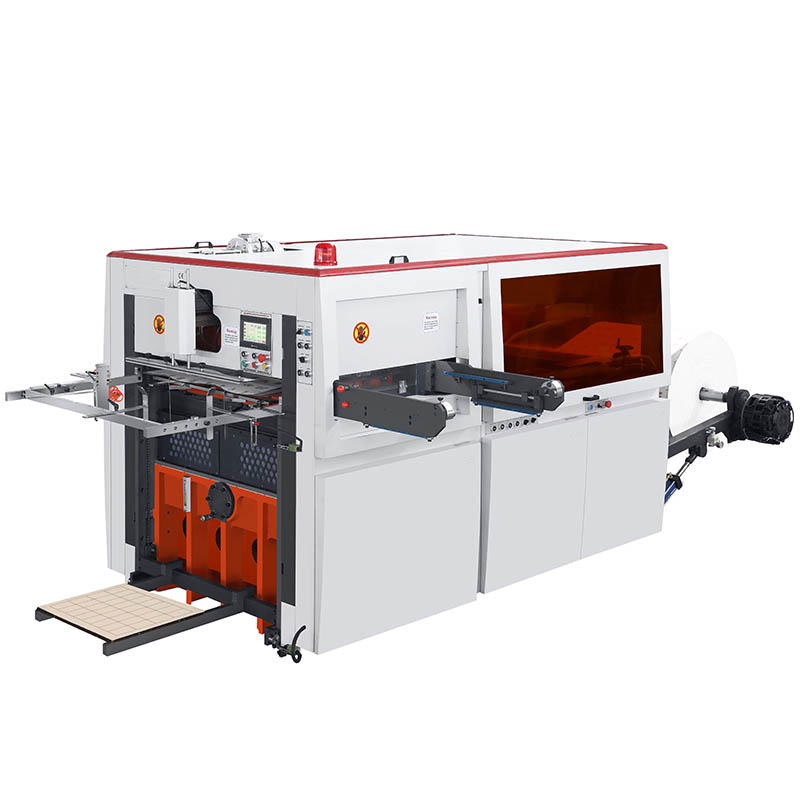
Choosing the right die is one of the most critical decisions when operating a roll die cutting machine. The die directly affects cutting precision, production efficiency, material waste, and equipment lifespan. Based on our practical experience working with customers in packaging and disposable product manufacturing—and in combination with the technical capabilities of BONJEE’s roll die cutting solutions—this guide will help you understand how to select the most suitable die for your application.
Understanding the Working Principle of a Roll Die Cutting Machine
A roll die cutting machine operates by using a cylindrical die mounted on a rotating shaft. As materials such as paperboard, laminated paper, foil, nonwoven fabric, or film pass through the machine, the rotating die continuously cuts shapes with high speed and precision.
Unlike flatbed systems, the roll die cutting machine is designed for continuous production, making it ideal for high-volume manufacturing such as paper plates, packaging components, and disposable food containers. BONJEE’s equipment is engineered for stable pressure control, synchronized feeding systems, and durable die mounting structures—factors that directly influence die performance and longevity.
When selecting a die, it is essential to understand that die accuracy must match the machine’s mechanical precision. A mismatch can lead to uneven cutting edges, excessive wear, or frequent downtime.
Selecting Die Material Based on Application
Die material determines durability, cutting sharpness, and maintenance frequency. In our experience serving packaging factories, most customers choose between the following die materials:
-
Tool steel dies – Highly durable and suitable for high-speed continuous production.
-
Alloy steel dies – Offer better wear resistance for abrasive materials.
-
Carbide-tipped dies – Ideal for ultra-long production cycles or laminated materials.
For example, in paper plate production lines using BONJEE’s roll die cutting machine, hardened alloy steel dies significantly reduce edge deformation during long shifts. According to guidance from organizations such as the International Association of Diecutting and Diemaking, proper material selection can extend die life by up to 30–50% under correct operating pressure.
Choosing a high-quality die material reduces long-term operational costs and protects your roll die cutting machine from excessive mechanical stress.
Matching Die Design with Product Specifications
Die geometry must precisely match product dimensions, thickness, and design complexity. When selecting a die for a roll die cutting machine, consider:
-
Material thickness and density
-
Required edge smoothness
-
Cutting tolerance (±0.1 mm or tighter if necessary)
-
Embossing or perforation requirements
In packaging applications, minor dimensional errors can affect downstream processes such as forming or sealing. Through real production cases, we’ve observed that improper die clearance often causes material tearing rather than clean cuts. BONJEE machines are designed with adjustable pressure systems, allowing operators to fine-tune performance based on die configuration.
A well-designed die ensures that the roll die cutting machine delivers consistent output, reduces scrap rates, and maintains uniform product quality.
Considering Production Speed and Volume
High-speed production demands dies that can withstand continuous rotational stress. A roll die cutting machine operating at industrial speeds requires perfectly balanced cylindrical dies. Poor balance leads to vibration, premature bearing wear, and uneven cutting.
From practical factory feedback, one of the most common issues arises when customers prioritize lower-cost dies without considering rotational balance accuracy. This can shorten the lifespan of both the die and the roll die cutting machine.
Authoritative manufacturing engineering principles, such as those referenced by Society of Manufacturing Engineers, emphasize the importance of precision machining and dynamic balancing in high-speed rotary systems. Investing in precision-balanced dies ensures stable production and lower maintenance costs.
Maintenance and Compatibility with BONJEE Equipment
Die selection is not only about cutting quality but also about long-term maintenance. A high-quality roll die cutting machine, such as those offered by BONJEE, is built with strong frames and precise alignment systems. However, improper die installation or poor-quality dies can compromise even the best equipment.
We recommend:
-
Regular inspection of die edges for wear
-
Proper lubrication of rotating shafts
-
Ensuring correct mounting torque
-
Storing dies in dry, temperature-controlled environments
In our service experience, customers who implement structured maintenance plans experience fewer breakdowns and significantly longer die service life. Compatibility between die specifications and machine shaft diameter is especially critical. Always verify technical drawings before purchasing replacement dies.
Cost vs. Long-Term Value
While initial die cost is an important consideration, focusing solely on price can be misleading. A lower-cost die may wear out quickly, reduce production speed, and increase waste—ultimately costing more over time.
When evaluating dies for your roll die cutting machine, calculate:
-
Expected production cycles
-
Material waste reduction
-
Downtime savings
-
Maintenance frequency
High-quality dies combined with a stable roll die cutting machine provide measurable ROI through efficiency and product consistency. Transparent supplier communication, technical documentation, and after-sales support are equally important factors in decision-making.
Conclusion: A Strategic Approach to Die Selection
Selecting the right die for your roll die cutting machine requires a balance of material science, mechanical compatibility, production planning, and long-term cost analysis. By understanding die materials, matching design specifications, considering production speed, and maintaining proper equipment care, manufacturers can significantly improve output quality and operational stability.
BONJEE’s advanced roll die cutting machine systems are engineered to support precision dies and high-volume production, offering reliable solutions for packaging and disposable product industries. With the right die selection strategy, businesses can achieve higher efficiency, lower waste, and sustainable manufacturing growth.
Table of Contents
- Understanding the Working Principle of a Roll Die Cutting Machine
- Selecting Die Material Based on Application
- Matching Die Design with Product Specifications
- Considering Production Speed and Volume
- Maintenance and Compatibility with BONJEE Equipment
- Cost vs. Long-Term Value
- Conclusion: A Strategic Approach to Die Selection