
 EN
EN
Understanding Your Product Range and Requirements
Choosing the right shrink packing machine begins with a deep understanding of your own products. At Bonjee Machine, we’ve worked with hundreds of clients, from food manufacturers packaging irregularly shaped bakery items to electronics companies boxing delicate components. A common mistake is selecting equipment based on a single “average” product, which leads to inefficiency when sizes vary. For instance, a beverage company might need to bundle cans in packs of 4, 6, and 12, requiring a machine with adjustable lane dividers and sealing jaws. Start by listing every product SKU—its dimensions (length, width, height), weight, material (e.g., cardboard, plastic, mixed), and desired pack pattern (single, multi-pack, tray). This profile dictates the machine’s core specifications. A shrink packing machine must accommodate your smallest and largest items without excessive changeover time. Our engineers often recommend conducting a “product audit” before machine selection.
Evaluating Machine Types and Their Flexibility
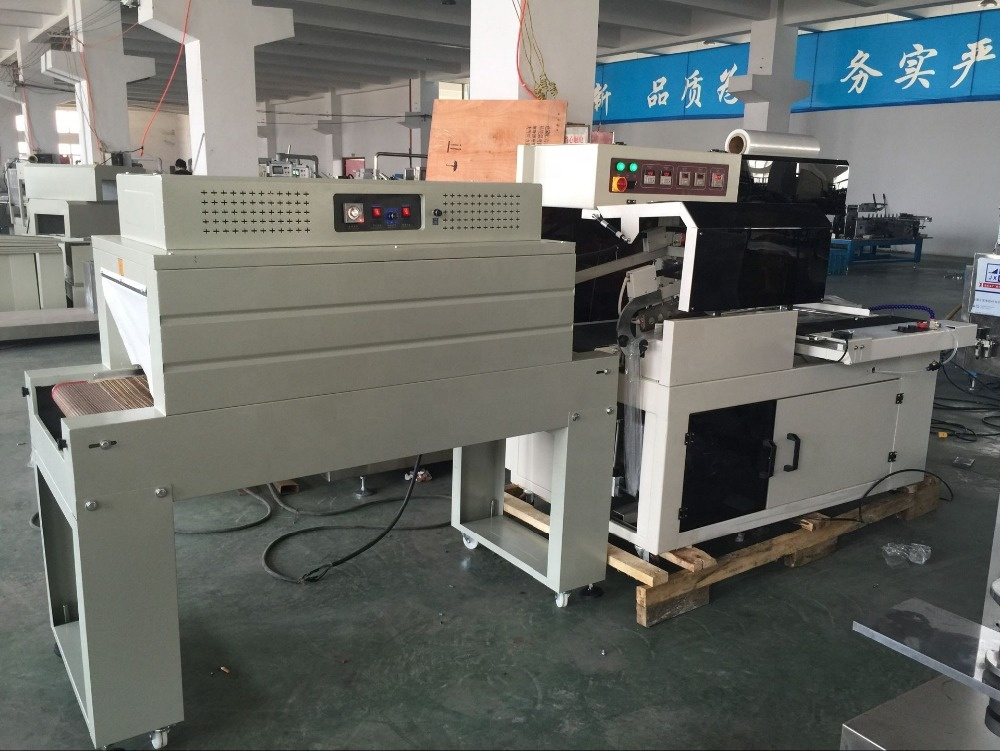
Not all shrink wrappers are created equal. The three primary types—sleeve wrappers, L-sealers, and shrink tunnels—serve different needs. For high-volume, uniform-sized products like DVD cases, a high-speed automatic sleeve wrapper is ideal. However, for diverse product sizes, an L-sealer combined with a tunnel offers greater flexibility. Based on our expertise at Bonjee, for operations handling anything from small cosmetics (e.g., 50mm x 50mm boxes) to large kitchen appliances, a robust L-sealer with a variable-speed conveyor and adjustable sealing wire is crucial. The sealing jaw should handle different film gauges and bag lengths. Our BSM series machines, for example, feature photo-electric sensors that detect product height and adjust the sealing cycle automatically, reducing film waste by 15% compared to manual settings. This adaptability is key for businesses with seasonal or evolving product lines.
Key Technical Specifications for Size Adaptability
Technical details separate a capable machine from a problematic one. Focus on these authoritative specs, often cited by the Packaging Institute and industry experts like Dr. James Smith of PackTech: First, the maximum and minimum product dimensions the machine accepts. A quality shrink packing machine should handle a range from, say, 50mm to 400mm in width. Second, sealing jaw adjustment: Look for tool-less, manual or automatic jaw width adjustment. Third, conveyor system: A variable-speed belt with side-guard rails that can be easily repositioned ensures smooth transition for different product footprints. Fourth, film compatibility: The machine should work with various shrink films (PVC, POF, PE) of different thicknesses, as film choice affects seal strength and shrink ratio. Our Bonjee machines incorporate European-grade ceramic sealing wires that maintain consistent temperature for reliable seals across different film types, a feature validated by ISO 9001 certifications.
The Role of Automation and Changeover Efficiency
For production lines with frequent size changes, automation significantly reduces downtime. Semi-automatic and automatic machines with programmable logic controllers (PLCs) allow you to save settings for each product size. As noted in "Packaging World" magazine, automated changeovers can improve line efficiency by up to 30%. In our experience, a client packaging both small hardware parts and large tool kits saved 20 minutes per changeover by using our Bonjee Auto-Size model with a touchscreen HMI storing 50 product recipes. Key features to seek include motorized adjustment of sealing jaw height and width, automatic film tension control, and integrated measuring systems. While full automation has a higher upfront cost, the ROI is rapid for batches under 500 units with multiple SKUs. The goal is to minimize manual intervention, which reduces errors and labor costs.
Considering Film Waste and Cost Implications
A machine that handles different sizes inefficiently can lead to substantial film waste. Trustworthiness in selection means providing transparent cost analysis. The film consumption should be optimized for each product size. Machines with a “film saving” function, like our Bonjee Eco-Pack series, use a servo motor to precisely cut film slightly larger than the product, reducing waste by up to 20%. According to a 2023 report by the Sustainable Packaging Coalition, proper machine-film pairing is critical for environmental and economic savings. Furthermore, consider the total cost of ownership: a versatile machine might have a higher price tag but lower long-term costs versus buying multiple dedicated machines. Always request a waste audit and film usage simulation from the supplier for your specific product mix.
Testing and Validation with Your Actual Products
Never buy a shrink packing machine based on specs alone. The authoritative step is to conduct a live test using your own products and film. Reputable manufacturers like Bonjee offer lab or factory testing services. Bring samples of your smallest, largest, and most challenging items. Observe the sealing quality, shrink tunnel temperature uniformity (critical for odd shapes), and overall line speed. This hands-on experience reveals practical issues—like whether a tall, narrow bottle tips over or if a sharp-cornered box punctures the film. Testing also helps fine-tune the machine settings, ensuring optimal performance. Insist on a performance guarantee for your specific range. This due diligence builds trust and ensures the machine delivers practical value on your factory floor.
After-Sales Support and Training for Versatile Operation
Finally, the machine’s value depends on your team’s ability to operate it flexibly. Ensure the supplier offers comprehensive training on changeover procedures, maintenance, and troubleshooting for different product sizes. At Bonjee, we provide detailed operation manuals, video tutorials, and on-site training to empower operators. Access to spare parts and technical support is crucial; a machine down for lack of a simple part halts production for all sizes. Check the supplier’s reputation through customer testimonials or case studies. A reliable partner will help you maximize the machine’s adaptability over its lifespan, ensuring your investment continues to meet evolving packaging needs.
Table of Contents
- Understanding Your Product Range and Requirements
- Evaluating Machine Types and Their Flexibility
- Key Technical Specifications for Size Adaptability
- The Role of Automation and Changeover Efficiency
- Considering Film Waste and Cost Implications
- Testing and Validation with Your Actual Products
- After-Sales Support and Training for Versatile Operation