
 EN
EN
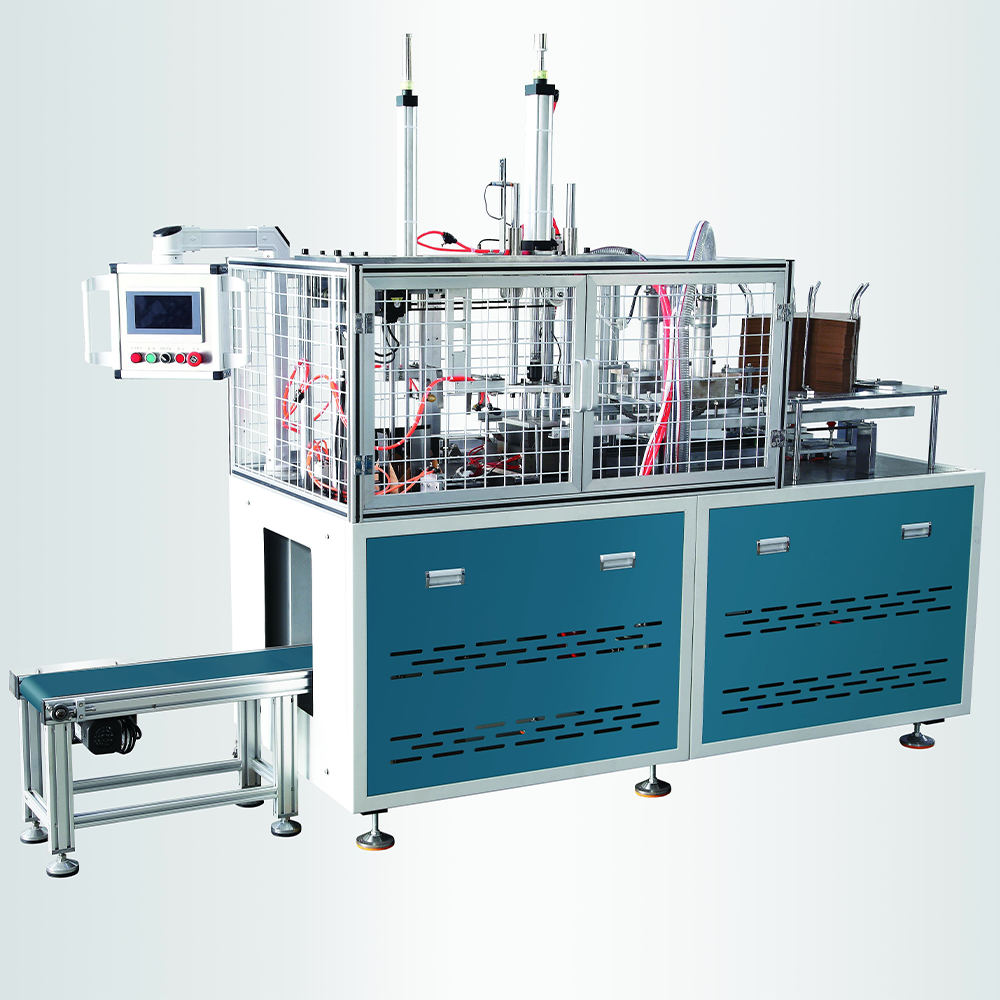
As global regulations on single-use plastics tighten and consumer demand for sustainable packaging grows, food service businesses and packaging manufacturers are increasingly turning to paper meal box machines to produce environmentally responsible takeaway containers. However, the term eco-friendly paper packaging is not as simple as switching from plastic to paper. The material fed into a paper meal box machine must satisfy multiple requirements simultaneously: it must be compatible with the machine heating, pressing, and forming mechanisms, provide adequate barrier properties against oil and moisture, and meet environmental claims like compostability, recyclability, or recycled content. Selecting the wrong material can result in machine jams, high reject rates, or food containers that leak or degrade during use. This guide examines the key material considerations for operating a paper meal box machine in an eco-conscious production environment.
Material Compatibility with Paper Meal Box Machines
A paper meal box machine relies on heat and pressure to form flat paper stock into three-dimensional food containers with defined shapes, rims, and compartment divisions. Not all paper materials respond to heat and pressure in the same way, and understanding the forming behavior of different paper types is essential for consistent production quality. The most critical material property for machine compatibility is the paper thermoforming behavior, which is the ability of the paper to soften and reshape under heat and then retain its new form upon cooling. Standard uncoated kraft paper has limited thermoforming ability and is typically not suitable as a standalone material for a paper meal box machine unless the finished product does not require moisture resistance. Coated papers, particularly those with PE or bio-based barrier coatings, offer better forming characteristics because the coating layer softens at forming temperatures and acts as a bonding agent, helping the paper fibers lock into the formed shape. The paper surface must also be compatible with the machine mold release mechanism. Some paper meal box machines use non-stick mold coatings or release agents, and the choice of paper coating must be tested to ensure it does not adhere to or degrade the mold surface over repeated cycles.
PE-Coated Paper: The Industry Workhorse
PE-coated paper is the most widely used material in paper meal box machine production and for good reason. A thin layer of polyethylene, typically 15 to 20 microns thick, is applied to one or both sides of a kraft paper base. During the forming process, the PE layer softens at the machine operating temperature of 180°C to 220°C and acts as a heat-sealable bonding medium that locks the formed folds, corners, and compartment walls into place. Once cooled, the PE layer provides a reliable moisture and oil barrier, making it suitable for packaging items ranging from dry snacks to hot, greasy meals. The paper base weight for PE-coated materials used in paper meal box machines typically ranges from 200 to 400 grams per square meter (GSM). Lighter weights around 200 to 250 GSM are used for smaller containers such as side dish boxes, while heavier weights of 300 to 400 GSM are needed for full meal boxes that must support heavier food loads and maintain structural rigidity. From a machine operation perspective, PE-coated paper runs smoothly through automatic feeding systems and forms consistently across production cycles. However, it is important to note that traditional PE-coated paper is not biodegradable or compostable in most municipal composting systems because the PE layer does not break down. For manufacturers marketing their products as compostable or biodegradable, PE-coated paper alone does not meet that claim and alternative barrier coatings must be used.
Greaseproof and Bio-Based Barrier Paper Options
For manufacturers targeting fully compostable or biodegradable food packaging, several alternative paper materials are compatible with paper meal box machines, though each comes with specific processing requirements. Greaseproof paper, typically made from highly refined chemical pulp with a density treatment rather than a coating, provides natural oil resistance without a plastic layer and is commonly produced in weights from 30 to 80 GSM. However, its lower weight and lack of a heat-sealable coating mean that the machine forming temperature may need to be reduced by 10°C to 20°C compared to PE-coated paper to prevent scorching, and mold pressure must be adjusted for reduced material thickness. Water-based barrier coatings, such as acrylic or PLA dispersions applied to kraft paper, offer oil and moisture resistance comparable to PE while being industrially compostable under certified conditions. When running PLA-coated paper through a paper meal box machine, the heat-sealing temperature window is narrower than for PE-coated paper, typically 160°C to 190°C, requiring tight temperature control to avoid under-sealing or coating degradation. Some manufacturers also offer specialized paper grades treated with fluorine-free oil and grease resistant (OG) coatings that combine compostability with excellent barrier performance, though these come at a higher material cost.
Recycled Content and Material Sustainability Verification
Using paper with recycled content in a paper meal box machine adds an important sustainability dimension but also introduces processing variables that must be managed. Recycled paper fibers are shorter and less uniform than virgin fibers, which can affect the structural strength of the formed container. For meal boxes that need to hold heavier food items, using paper with more than 50 percent post-consumer recycled content may result in reduced rigidity unless the base weight is increased to compensate. Recycled paper also tends to have higher moisture content and may contain trace contaminants from the recycling process that can affect forming consistency or cause spotting on the finished container surface. A practical approach is to specify recycled-content paper that has been specifically graded for food-contact thermoforming applications, rather than using general-purpose recycled paper. When making environmental claims about the finished packaging, it is essential to understand the distinction between recyclable, compostable, and biodegradable. A paper meal box made from PE-coated paper is technically recyclable in facilities equipped to separate the PE layer, but this infrastructure is not universally available. A box made from PLA-coated paper is industrially compostable under EN 13432 or ASTM D6400 standards, but may not break down in home composting conditions. Clearly communicating these distinctions to buyers helps set accurate expectations and avoids greenwashing claims that can damage brand credibility.
Material Thickness, GSM, and Machine Settings
The relationship between paper weight and machine settings on a paper meal box machine is direct and critical. Heavier paper in the 300 to 400 GSM range requires higher forming pressure and may need a slightly longer dwell time in the mold to allow heat to penetrate through the full material thickness. Lighter paper in the 200 to 280 GSM range forms more quickly but may be prone to tearing at sharp corners or deep compartment divisions if the mold geometry is aggressive. The paper meal box machine heating temperature, pressing pressure, and cycle time must be calibrated as a set for each material specification. Modern machines with PLC touch screen controls allow operators to save material-specific parameter sets, making changeovers between different paper grades faster and more consistent. A useful practice is to maintain a material specification log that records the optimal machine settings for each paper type, including supplier, grade, GSM, coating type, forming temperature, press pressure, dwell time, and the resulting defect rate. Over time, this log becomes a valuable reference for troubleshooting and for qualifying new material sources without disrupting production.
Practical Case Study: Switching to Compostable Paper
A meal box manufacturer supplying a chain of organic food restaurants needed to switch from standard PE-coated paper to a fully compostable material for their paper meal box machines. The existing production line used 320 GSM PE-coated kraft paper running at 45 pieces per minute with a 99.2 percent dimensional consistency rate. After testing several alternatives, they selected a 340 GSM kraft paper with a water-based compostable barrier coating certified to EN 13432 standards. The switch required several adjustments: the forming temperature was reduced from 205°C to 185°C to suit the narrower heat-sealing window of the compostable coating, the dwell time was increased by 0.3 seconds to ensure complete bonding at compartment corners, and the mold release spray frequency was increased slightly to prevent the water-based coating from building up on the mold surface. The machine ran on PLC controls with Delta and Schneider electrical components, CE-certified construction, and high-strength steel frame. After a two-day commissioning period, the line achieved a production speed of 42 pieces per minute with a defect rate comparable to the original PE-coated paper run. The material cost was approximately 18 percent higher, which the manufacturer offset through a premium pricing strategy supported by third-party compostability certification.
Frequently Asked Questions (FAQ)
Q: How do I know if a paper material is compatible with my paper meal box machine?
A: Compatibility testing is the most reliable method. Run a small trial batch of 200 to 500 boxes using the new material, starting with conservative temperature and pressure settings. Inspect for forming completeness, seal integrity at folds and corners, and any signs of material sticking to the mold. The ideal material will form cleanly without tearing, release from the mold without residue buildup, and maintain structural integrity when filled with the target food product.
Q: Can I run recycled paper through a paper meal box machine?
A: Yes, but with qualifications. Recycled-content paper can be used in a paper meal box machine provided it is graded for food-contact thermoforming applications. Expect to increase the paper weight by 10 to 20 percent compared to virgin fiber paper to achieve equivalent structural strength. It is also advisable to run a trial batch to check for forming consistency and surface appearance before committing to production volumes.
Q: What is the difference between biodegradable and compostable paper for meal box production?
A: Biodegradable means the material will eventually break down through natural biological processes, but this term has no defined timeline or conditions. Compostable is a stricter, certified standard: industrially compostable paper must break down by at least 90 percent within 180 days under controlled composting conditions as defined by standards such as EN 13432 in Europe or ASTM D6400 in North America. When sourcing paper for a paper meal box machine intended for eco-friendly food packaging, look for certified compostable grades with documented test results rather than materials labeled only as biodegradable.
Table of Contents
- Material Compatibility with Paper Meal Box Machines
- PE-Coated Paper: The Industry Workhorse
- Greaseproof and Bio-Based Barrier Paper Options
- Recycled Content and Material Sustainability Verification
- Material Thickness, GSM, and Machine Settings
- Practical Case Study: Switching to Compostable Paper
- Frequently Asked Questions (FAQ)