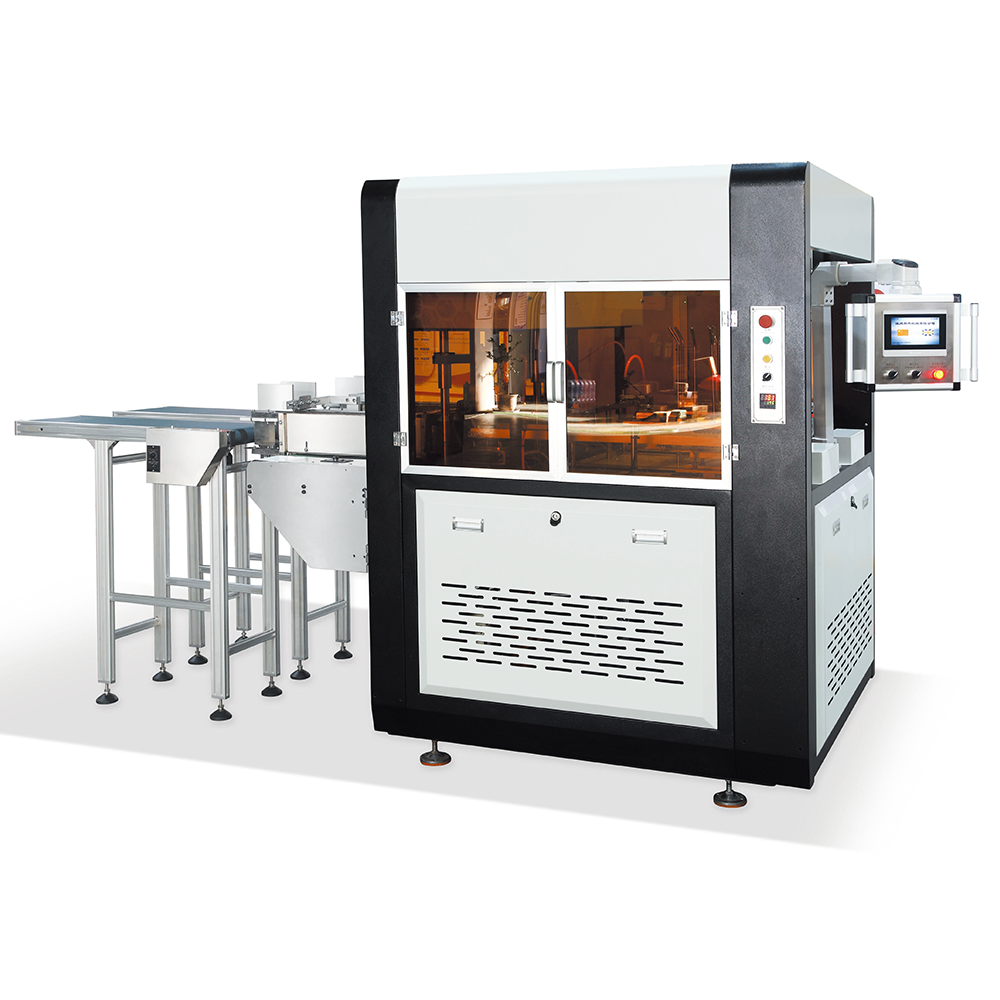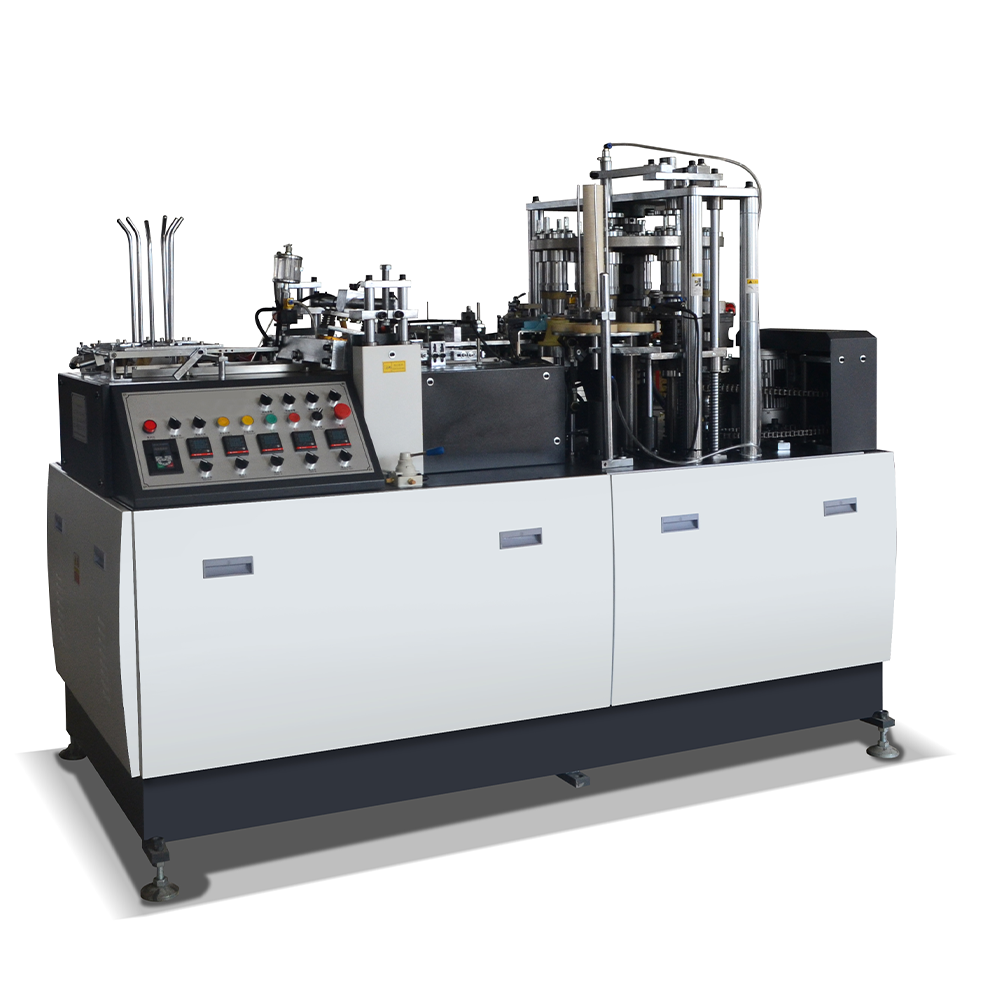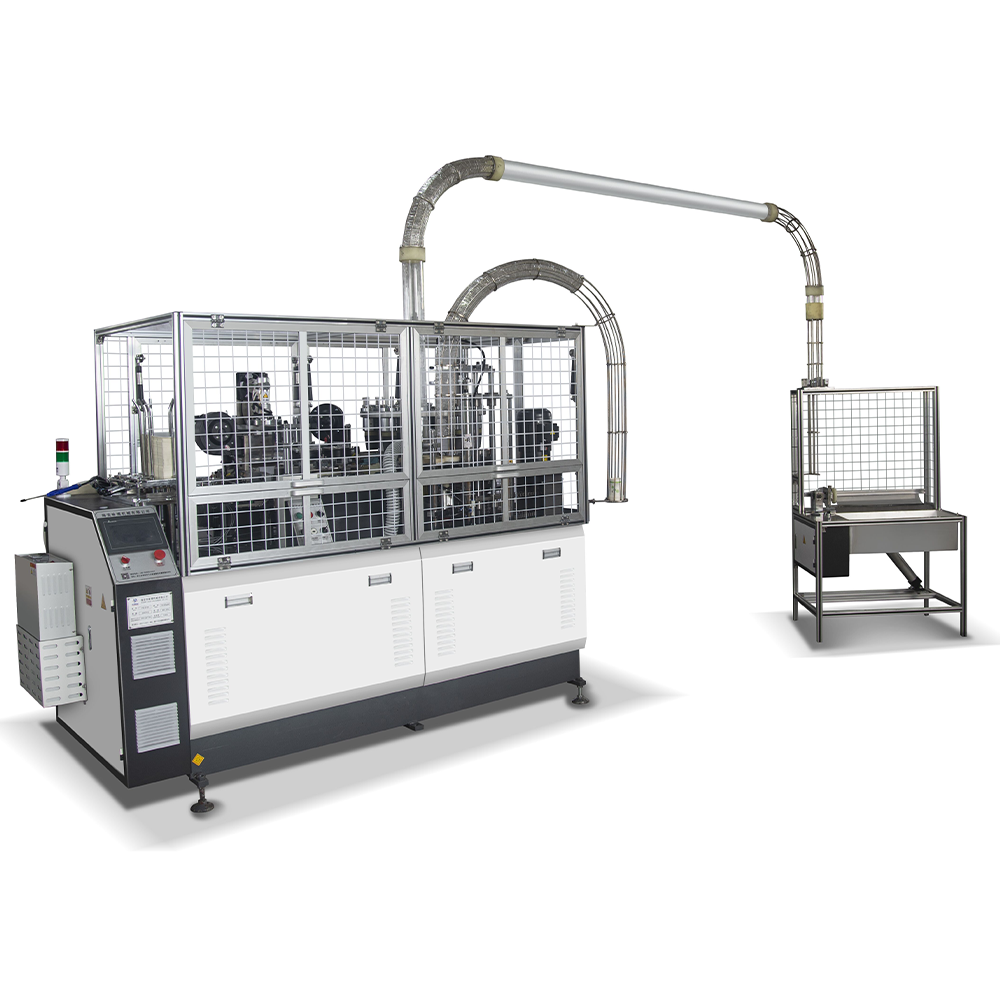
In the realm of disposable beverage packaging machinery, the BJ100 High-Speed Paper Cup Forming Machine emerges as a cutting-edge solution engineered for large-scale, efficient production of premium paper cups. Designed to meet the demands of high-volume beverage manufacturers and packaging suppliers, it combines advanced automation, precision engineering, and versatility, setting a new standard for speed and reliability in the industry.
The BJ100 machine distinguishes itself through cutting-edge technical innovations and exceptional adaptability to diverse production requirements, setting a new benchmark for high-speed paper cup manufacturing. Every component is engineered to balance speed, precision, and reliability, making it a preferred choice for enterprises scaling their disposable beverage packaging operations.
High-Speed Rotary Paper Feeding System: At the core of its performance is a precision-engineered rotary paper feeding mechanism, paired with an innovative hook cup design that minimizes material slippage and ensures consistent transfer. This synergy enables an impressive maximum production speed of 130 cups per minute—far exceeding the average 80–100 cups of conventional mid-speed machines. The stable operating speed, calibrated to 100–110 cups per minute, offers flexibility to adjust based on paper material specifications: thinner single PE-coated paper (180–220 g/m²) can run at the higher end of the range, while thicker double PE-coated stock (250–300 g/m²) maintains optimal stability at 100 cups per minute. The rotary system’s servo-driven motors reduce vibration during high-speed operation, preventing paper jams and ensuring uniform feeding even for extended production runs.
Dual PE-Coated Paper Compatibility: The BJ100 is specifically engineered to handle both single and double PE-coated paper with exceptional precision, addressing the diverse needs of beverage packaging. For single PE-coated paper—commonly used for cold drinks like sodas, iced teas, and bottled water—the machine’s adaptive heating system controls temperature to avoid PE layer melting while ensuring secure bonding. For double PE-coated paper, designed for hot beverages such as coffee, tea, and hot chocolate, the equipment’s enhanced sealing technology creates a robust moisture barrier that prevents cup deformation and leakage, even when holding liquids at 95℃ for up to 30 minutes. This versatility eliminates the need for separate machines for hot and cold drink cups, streamlining production lines and reducing capital investment.
Integrated Sensor Monitoring and PLC Control: Equipped with a sophisticated network of 12+ precision sensors and a state-of-the-art PLC (Programmable Logic Controller) system, the BJ100 delivers comprehensive real-time production monitoring. Sensors track critical parameters including paper feed alignment, sealing temperature, bottom knurling depth, and cup discharge rate, transmitting data to the PLC for instant analysis. In the event of anomalies—such as paper misalignment, temperature deviations, or mechanical jams—the system triggers automated alarm responses (audible alerts and visual indicators on the HMI) and can initiate a controlled slowdown or full shutdown to prevent material waste and equipment damage. The PLC also stores production logs for up to 90 days, enabling managers to analyze efficiency trends, identify bottlenecks, and optimize workflows, minimizing unplanned downtime by up to 40% compared to manually monitored machines.
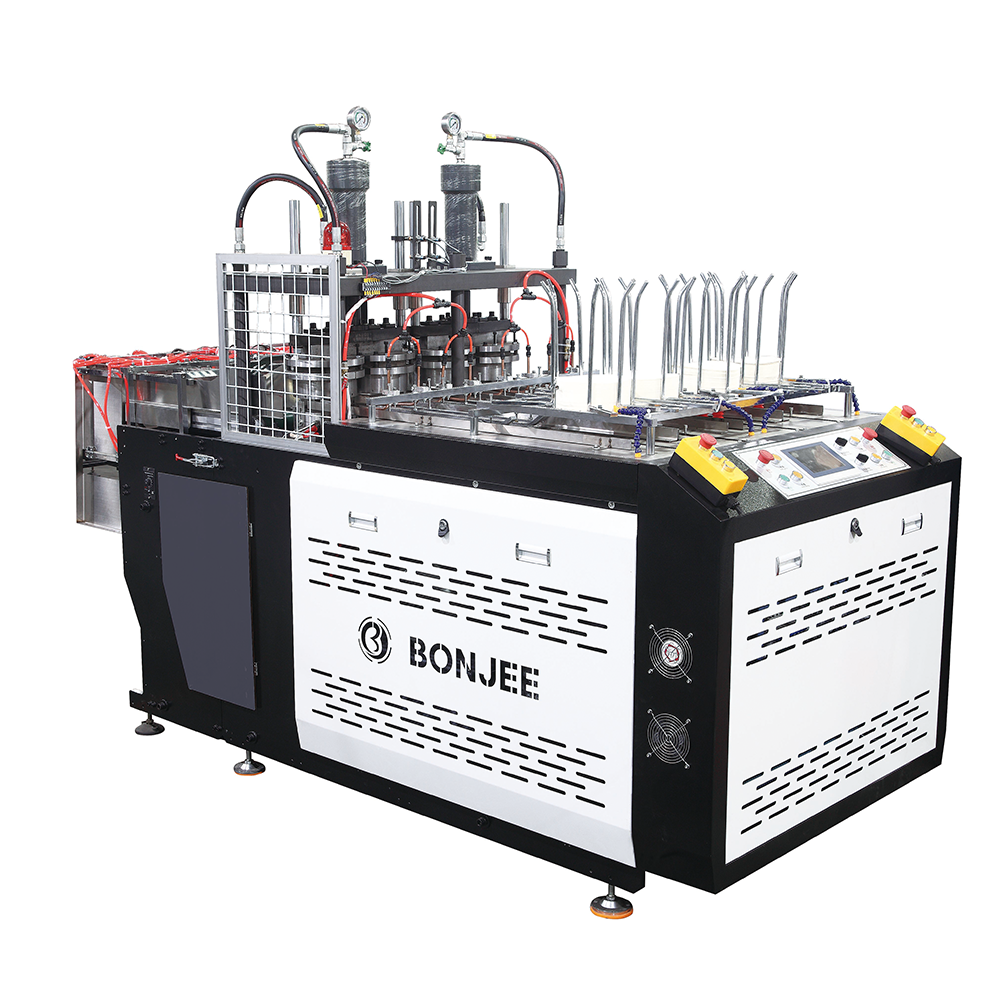
Enclosed Safety Structure: Safety and durability are prioritized through a full protective cage constructed from 304 stainless steel, compliant with international safety standards (ISO 13849-1). The cage features transparent polycarbonate panels that allow operators to monitor production without exposing themselves to moving parts—critical during high-speed operation where components rotate at up to 1,200 RPM. The machine’s industrial-grade components, including hardened steel gears and corrosion-resistant bearings, are engineered to withstand continuous use, reducing mechanical wear and extending the equipment’s service life to 8–10 years with proper maintenance. Emergency stop buttons are strategically placed on three sides of the machine, ensuring rapid shutdown in case of emergencies.
The BJ100’s competitive edge lies in its ability to deliver high-volume production without compromising quality, operational costs, or flexibility—addressing the key pain points of large-scale beverage packaging operations.
Industry-Leading High-Speed Output: With a stable operating speed of 100–110 cups per minute (peaking at 130), the BJ100 outperforms mid-speed alternatives by 30–50%, making it an ideal solution for large beverage brands, national coffee chains, and packaging manufacturers handling massive order volumes (100,000+ cups daily). For example, a medium-sized coffee chain with 500 locations can meet its daily cup demand of 150,000 units with just two BJ100 machines running 8-hour shifts, reducing the need for multiple lower-speed machines and saving floor space. The high-speed output also enables faster order fulfillment, helping businesses capitalize on peak demand periods (e.g., summer beverage seasons or holiday rushes) without delays.
Consistent Quality Assurance: The combination of the rotary feeding and hook cup system, paired with real-time sensor monitoring, ensures exceptional consistency in cup dimensions (±0.1mm tolerance for height and diameter), sealing strength (withstands 5kg of axial pressure without leakage), and shape uniformity. This level of standardization is critical for brands prioritizing product consistency—consumers expect the same cup performance across all locations, and the BJ100 delivers by eliminating variations caused by manual intervention or inconsistent feeding. The machine’s ultrasonic sealing technology creates seamless side seams that prevent liquid seepage, while the hot-air bottom bonding ensures structural integrity, even for cups filled to capacity and stacked in transit.
Low Operational Waste: The BJ100 minimizes material waste through a series of intelligent design features. Automated paper alignment sensors correct misfeeds before they result in defective cups, while real-time defect detection identifies and rejects flawed products (e.g., incomplete sealing, uneven curling) at the source, reducing waste to less than 1%—compared to 3–5% for less advanced machines. Precise ultrasonic sealing controls the amount of heat and pressure applied, avoiding over-sealing (which damages paper fibers) or under-sealing (which causes leaks). These efficiencies translate to a 15% reduction in production costs, as businesses save on raw material expenses and avoid the labor costs associated with sorting and discarding defective cups.
Easy Maintenance and Calibration: Designed with user-friendliness in mind, the BJ100 features modular components that can be quickly removed and replaced, reducing maintenance time by 30% compared to integrated systems. Standardized mold interfaces allow for tool changes in under 20 minutes—enabling rapid switching between cup sizes (4–16 oz) to meet diverse order requirements. The intuitive HMI (Human-Machine Interface) touchscreen provides step-by-step guidance for parameter adjustments (e.g., speed, temperature, sealing pressure), eliminating the need for specialized technical training. Routine maintenance tasks, such as lubrication and sensor calibration, are automated or simplified through the PLC system, further reducing labor costs and downtime.
The BJ100 integrates a comprehensive suite of automated functions to streamline the entire paper cup manufacturing process, from raw material feeding to finished product collection, with minimal human intervention.
Rotary Paper Feeding and Forming: The servo-driven rotary feeding mechanism precisely delivers paper blanks from the hopper to the forming station, where the hook cup design ensures smooth transfer through each production stage. The process begins with paper blank cutting (calibrated to the desired cup height), followed by side seam sealing (via ultrasonic technology), bottom knurling (to reinforce the base), curling (for a safe, comfortable rim), and final inspection. Each stage is synchronized to maintain high-speed output without compromising quality—for example, the curling station adjusts its speed automatically to match the feeding rate, ensuring consistent rim formation even at 130 cups per minute.
Intelligent Sensor Network and PLC Control: The machine’s sensor network provides 360-degree monitoring of the production process: paper feed sensors detect misalignments within 0.5mm, temperature sensors maintain sealing heat within ±2℃, and pressure sensors ensure consistent bonding force. The PLC system centralizes control, processing data from the sensors to make real-time adjustments—e.g., slowing the feeding rate if a jam is detected, or increasing sealing temperature for thicker paper. Operators can access real-time production data (output count, defect rate, running time) via the HMI, and the PLC generates detailed reports for quality control and inventory management. The system also supports remote monitoring, allowing managers to check machine status and adjust parameters from a centralized control room.
Automatic Counting and Collection: A built-in optical counting system accurately records production volume with a margin of error of less than 0.1%, eliminating the need for manual counting and reducing the risk of inventory discrepancies. The collection unit features an adjustable stacking mechanism that arranges finished cups in neat, uniform piles (up to 50 cups per stack) to facilitate seamless downstream packaging or shipping. The stacking height is customizable to match packaging requirements, and the system automatically stops when a stack is complete, alerting operators to transfer the cups—minimizing the risk of damage from over-stacking.
Precision Sealing and Finishing: The BJ100 utilizes advanced ultrasonic technology for side seam sealing, which creates a strong, leak-proof bond without using adhesives (reducing environmental impact and material costs). The ultrasonic waves vibrate the PE coating at a high frequency, melting it to form a seamless seal that withstands liquid pressure and temperature changes. For bottom bonding, hot-air heating is employed to ensure secure attachment of the base to the cup body, with temperature and pressure adjusted dynamically based on paper thickness. The curling station uses a heated roller to form a smooth, rounded rim—eliminating sharp edges and enhancing user comfort—while a final inspection sensor checks for rim irregularities, rejecting any cups that fail to meet standards.
The BJ100’s high-speed capabilities and material versatility make it indispensable across sectors requiring large-scale, reliable paper cup production.
In conclusion, the BJ-S100 High-Speed Paper Cup Forming Machine represents a significant leap in high-volume paper cup production technology. Its blend of speed, precision, and adaptability makes it a cornerstone asset for enterprises seeking to dominate the competitive disposable beverage packaging market. By prioritizing efficiency without sacrificing quality, the BJ-12 effectively addresses the evolving needs of global beverage brands and packaging suppliers.
Model |
BJ100 |
Paper Cup Specification |
40ml-16 Oz (Mold exchangeable) |
Paper Cup Material |
150 - 350g/㎡ (single/doublePEcoatedpaper) |
ProductionSpeed |
100-110Pcs/m |
PowerSupply |
380V50Hz |
TotalPower |
5Kw |
Air Source |
0.4-0.5m³/min |
Machine Weight |
2000 KG |
Overall Dimension(LxWxH) |
2350x1250x1900mm |
Related Products

 EN
EN