
 EN
EN
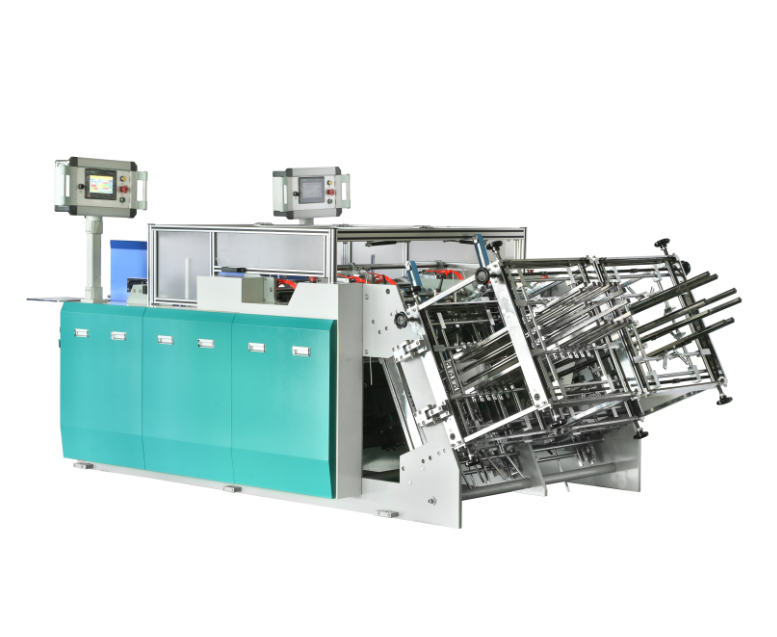
In order to achieve high-quality and efficient fast food box machine production, it is necessary to be detail-oriented and understand the machine's features, along with the operational and safety standards. The fast food box machine from Wenzhou Bonjee Machinery is equipped with the latest technology, including full servo motor drived, international branded electrical parts, and patented forming technologies. The setup is made easier with the advanced features, while the machine continues to perform at its best. The following is a guide to assist you in setting up the fast food box machine.
Site Preparation and Inspection Before Installation
First and foremost, before unpacking the fast food box machine, an appropriate installation site must be determined and inspected to make sure all pre-requisites are met. Specifically, the installation site must be checked for accessibility. Bonjee’s machines, like the BJ-DB two lanes fast food paper box machine, need ample space, including a dependable, flat and stable surface to allow for the operation and maintenance of the machine, as well as the storage of raw materials. The machine also needs a power supply that meets the voltage requirements provided in the user manual, which means the electrically powered parts of the machine must be from reputed brands like Siemens and Schneider. They tend to perform best with stable power and may malfunction with inadequate power supply. Lastly, ensure that the space is sufficiently ventilated, and water is available, if required for the model. Also, try to make sure the environment is not too dusty or moist, as that could affect the precision components of the machine.
Unpacking and Checking What We Have
Take your time unpacking the box containing the fast food box machine. Check to make sure all components are present and in good condition. Bonjee packages the entire machine to keep it safe in transit, but we still need to check for damages. Make sure the forming molds, servo motors, control panels, and hydraulic systems (for the BJ-SPT500Y hydraulic press paper dish machine model) are all present. Use the packing slip from Bonjee to help check off all the parts. Look for the patented parts: the 3D carton forming device (patent No. ZL 2024 2 3031812.0) and the dual-compartment lunch box forming device (patent No. ZL 2020 2 1841187.5). These are important for the machine to function properly. If there are any missing or damaged components, contact Bonjee’s technical support to order replacements.
Precision Calibration and Mold Installation
Proper installation and calibration are vital since the mold is the main part that shapes the fast food boxes. Bonjee's fast food box machine is designed to accommodate several mold changes to best fit the different food box market demands. First, remove any debris from the mold and the machine's mold mounting area, and then clean it. Mold installation involves alignment with the machine's positioning pins and securing it with the provided fasteners. It is important that the mold is fastened with no looseness at all. The reason for this is that the end result could be a number of defective products, and this is something no end-user would want. For mold calibration, use the control system that is servo motor driven. Bonjee’s full servo motor circuitry or design provides fine control for adjusting the height, pressure, and angle of mold forming on the control panel. Run a small batch of raw materials to test the alignment of the formed boxes. The formed boxes should have even edges and should not have boxes with wrinkles. Boxes should meet all dimension requirements. Smooth operational functioning of the machine is indicative of fine alignment and adjustment.
Electrical and Pneumatic System Connection
To connect the fast food box machine to the power supply and pneumatic system (if applicable), follow the manufacturer's instructions. For electrical connections, the power cord should be properly grounded to avoid electrical shocks. Also, ensure that all wires are connected to the correct terminals as shown in the wiring diagram. Bonjee’s machines have international standard electrical interfaces, ensuring easy and safe connections to local power grids. For pneumatic systems (which are present in models with a curling function, such as the BJ-CHX rectangle paper tray with curling), connect the air compressor to the machine’s air inlet and verify that the air pressure is within the specified range (usually 0.6-0.8 MPa). Using soapy water on the connections will help you check for air leaks (bubbles indicate leaks that should be sealed up). When you finish the connections, turn on the power and test the control panel to check if all buttons, displays, and safety features (like emergency stop buttons) are working.
Raw Material Preparation and Loading
Choose good quality raw materials that work well with your fast food box machine. The Bonjee equipment works with different types of paperboard. This includes kraft paper and coated paper of specific thicknesses (Usually 180-350 g/m²). Ensure that the paper is dry and flat and has no tears or contamination. Bad raw materials can cause mechanical jams and can affect the quality of the product. Some Bonjee models have a die-cutting function. If your model doesn't have die-cutting, Bonjee can provide one-stop solutions with a separate die-cutting machine. Paper should be cut prior to loading into the fast food box machine according to the die specifications of a particular machine. Paper should be loaded into the feeding tray of the machine. The cut paper should be aligned to the feeding tray to prevent paper misfeeding. Feeding speed should be adjusted according to the machine’s production capacity. It is worth noting that Bonjee single-lane fast food box machines work at 160-200 pcs per minute. Dual-lane models like the BJ-DB can do 200-300 pcs per minute.
Quality Inspection and Test Run
Before starting mass production, perform a at least one test run to verify the performance of the fast food box machine. For the test run, make a small batch of about 50 to 100 boxes and inspect each box for the following qualities: size, folding precision, smoothness of edges, and overall structural integrity. Ensure that the boxes can hold food without falling apart. While running the test for boxes, monitor the overall performance of the machine. Look and listen for any out of the ordinary noise, vibrations, or jams. Make sure that the equipment’s servo motors, hydraulic systems, and forming mechanisms are in sync. Bonjee fast food box machines are built with intelligent control systems that give real time updates about the production speed and any issues, which simplifies the process of identiying issues and correcting them. If boxes have defects such as uneven folding of the edges or incomplete structure of the boxes, adjust the feeding speed, forming pressure, or other parameters of the machine’s molding systems. Do the test run as many times as needed until the quality of the boxes is to your standards.
Setting Up Routine Maintenance and Safety Checks
When dealing with industry machinery, safety should always remain top priority. Perform a thorough safety check on the fast food box machine. Ensure all safety guards are installed, emergency stop buttons are accessible, and the machine meets international safety standards (Bonjee’s CE certification and complete EN ISO 12100:2010 standards). Operators on the machine should be trained on all proper safety procedures, including how to clear a jam, shut the machine down in an emergency, and stay clear of moving parts. Establishing a routine maintenance schedule will also be important to ensure the machine lasts as long as possible. Bonjee suggests a daily clean of the mold and feeding tray, a weekly check on the electrical connections and pneumatic hoses, and a monthly grease of moving parts. Ensure to also log maintenance efforts and call Bonjee’s after-sales service for support if complex issues arise.
Starting Mass Production and Monitoring
With the completion of the preparation steps and the successful completion of the test run, begin mass production with the fast food box machine. Make sure to keep monitoring the production stream to maintain quality and production efficiency. The machine's control panel helps you keep tabs on the production stream, adjust the parameters for production volume (for example, during peak demand, you can increase the production speed), and resolve minor production issues. The machine is built to handle the long-term and heavy operational workload. To ensure uninterrupted production, maintain a stock of raw materials. For quality control ensure you are regularly sampling and inspecting product boxes. The fast food box machine from Bonjee has been designed to achieve stabled and efficient production to help lower your production costs while meeting the demands of the market.
Table of Contents
- Site Preparation and Inspection Before Installation
- Unpacking and Checking What We Have
- Precision Calibration and Mold Installation
- Electrical and Pneumatic System Connection
- Raw Material Preparation and Loading
- Quality Inspection and Test Run
- Setting Up Routine Maintenance and Safety Checks
- Starting Mass Production and Monitoring