
 EN
EN
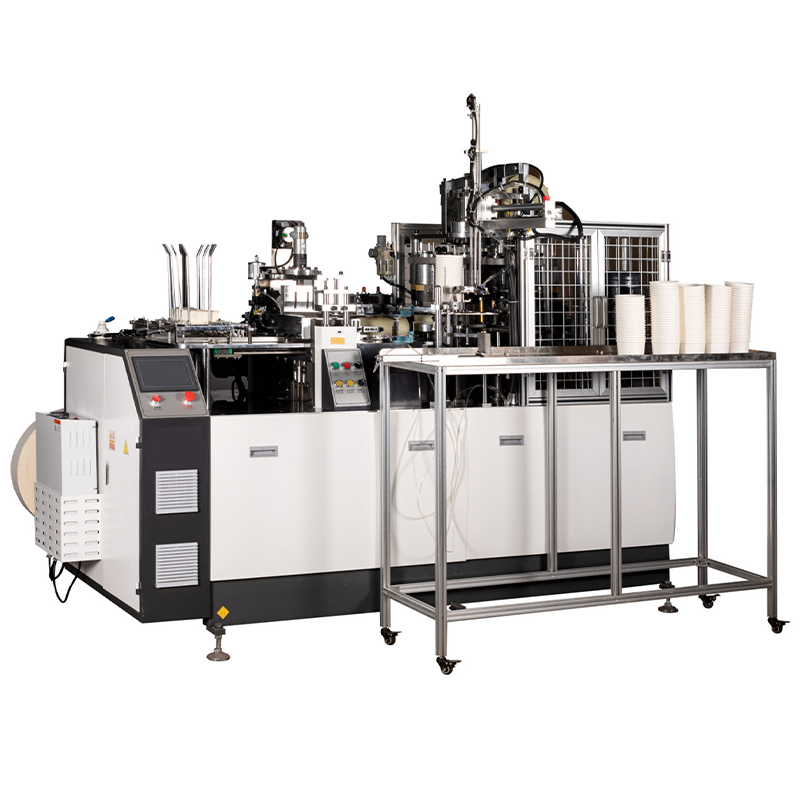
Automation Level and Operational Workflow
How Operator Involvement Impacts Cycle Time and Error Rates
When people get involved in running paper meal box machines, it really affects how efficient production ends up being. With semi automatic systems, workers have to feed materials manually between each cycle, which actually adds about 30 to 40 percent more time than what fully automatic machines need according to those packaging industry standards set by FPA. And this manual work leads to mistakes too. About fifteen percent of all defects during box making come from human handling issues like folds that don't line up properly or glue applied unevenly across different boxes. Money wise, these kinds of errors cost quite a bit. Facilities typically lose around seven hundred forty thousand dollars every year because of manufacturing mistakes made by staff members as shown in research conducted by Ponemon Institute back in 2023 on data breaches and operational failures.
From Manual Feeding to Closed-Loop Production: The Automation Spectrum
The operational workflow spectrum ranges from labor-intensive processes to integrated systems:
| Automation Tier | Operator Tasks | Error Rate | Output Consistency |
|---|---|---|---|
| Semi-Automatic | Manual feeding, quality checks | 4–7% | Moderate (±8%) |
| Fully Automatic | Supervision only | <0.5% | High (±1.5%) |
When it comes to closed loop automatic machines, they basically handle everything from moving materials around to forming products, sealing them properly, and checking quality as things go along. This cuts down on those pesky manual transfers that slow everything down. The result? Factories need fewer people on hand during shifts usually saving between two to three workers per shift. And when everything runs smoothly, these systems can stay operational over 99 percent of the time if set up right. Small and medium businesses are taking notice too. According to recent industry data most companies (around 68%) prefer modular systems because they allow for step by step automation improvements as their business grows. The Factory Production Association actually confirmed this finding in their latest survey back in 2023.
Total Cost of Ownership and ROI for Paper Meal Box Machines
Upfront Investment vs. Long-Term Savings: $45K Semi-Automatic vs. $180K+ Automatic Systems
The cost gap between semi-auto and full auto paper meal box machines is pretty substantial. Most businesses looking at semi-automatic options will need around forty-five grand to get started, whereas the fully automatic versions typically begin at about one hundred eighty thousand dollars. Why such a big difference? Well, the automatic systems come packed with features like advanced motion controls, servo driven forming mechanisms, and those fancy embedded vision systems that cut down on manual labor requirements. When it comes to paying back that investment, automatic models tend to pay for themselves faster thanks to their ability to run non-stop and maintain consistent product quality throughout shifts. Some shops report saving anywhere from forty to sixty percent on labor costs alone during each workday. According to recent industry reports from the Ponemon Institute published last year, companies usually see their money back within just over two years when operating at about three quarters of maximum capacity. These savings mainly come from lower staffing needs, less material waste, and significantly fewer production stoppages.
Hidden Costs: Downtime, Labor Dependency, and Maintenance Frequency by Automation Tier
Beyond purchase prices, operational economics diverge sharply:
- Semi-automatic systems incur 12–18% higher labor costs due to manual feeding and removal tasks, increasing vulnerability to workforce shortages and training gaps
- Automatic machines experience 30% less unplanned downtime through closed-loop production—but require certified technicians for maintenance
- Predictive maintenance in premium models cuts repair costs by 25%, though it demands specialized service contracts
| Cost Factor | Semi-Automatic | Automatic |
|---|---|---|
| Annual Labor | $28k–$35k | $8k–$12k |
| Material Waste | 8–10% | 2–3% |
| Unscheduled Downtime | 15–20 hours/month | <5 hours/month |
Semi-automatic units risk over $18k annually in hidden expenses—including onboarding, turnover, and rework—while automatic systems optimize throughput but face higher technical service fees. Crucially, both tiers benefit from ISO 22000-compliant hygiene design, ensuring food-grade compliance without retrofitting.
Throughput, Scalability, and Real-World Production Fit
Output Capacity Comparison: 1,200 vs. 6,500+ Boxes/Hour Under Standard Conditions
Semi automatic paper meal box machines usually manage around 1200 boxes per hour when tested according to ISO standards (specifically ISO 15378:2017). These require someone to load materials manually and check quality at regular intervals. Fully automatic versions can crank out over 6500 boxes an hour thanks to continuous feeding mechanisms, robots that stack finished products, and AI vision systems that spot defects as they happen. The big difference in output between these two types comes down to things like synchronized folding controlled by servos, accurate glue application, and instant feedback on dimensions which removes those slow human bottlenecks. Machines perform pretty consistently with standard 350gsm kraft paper stock. But watch out for complex designs such as boxes with two compartments or reinforced lids since these configurations tend to cut production speed by about 18 to 22 percent.
Modular Scalability Trends Among SMBs: Why 68% Prioritize Flexibility Over Peak Throughput
Small and medium businesses increasingly favor modular paper meal box machines despite lower peak output, with 68% opting for scalable configurations over maximum-throughput systems (FPA Industry Survey, 2023). This preference reflects practical operational realities:
- Demand volatility: 57% of food-packaging SMBs face 30% monthly order fluctuations
- Product diversification: 43% regularly switch between three or more box sizes and formats
- Budget constraints: Modular expansions cost 60% less than full-line automation upgrades
Systems that can scale up let manufacturers boost their capacity bit by bit when needed. For instance, companies might install another forming station or add an inline printing module as demand grows. This kind of setup helps them handle busy seasons without having expensive machinery sitting unused during slower months. The real benefit here is lower financial risk since businesses don't have to invest in massive overcapacity upfront. Most plants manage to keep around 85 to 90 percent of their equipment running regularly throughout different production periods. These approaches actually match what the Association for Manufacturing Excellence calls lean manufacturing practices, something many forward thinking manufacturers are adopting these days to stay competitive without wasting resources.
FAQ
-
What is the main difference between semi-automatic and fully automatic paper meal box machines?
Semi-automatic machines require manual labor for feeding and quality checks, while fully automatic machines automate the entire workflow, including quality assurance and product handling. -
How much does automation impact production efficiency?
Automation significantly reduces cycle time and error rates. Fully automatic systems save time and reduce defects compared to manual or semi-automatic processes. -
What are the upfront costs for these machines?
Semi-automatic machines start at $45K, whereas fully automatic systems begin at $180K+, reflecting the advanced features and efficiencies offered by automatic models. -
Which businesses benefit the most from modular paper meal box machines?
SMBs benefit from modular systems due to demand volatility, product diversification needs, and budget constraints, allowing for gradual scalability rather than full-line automation investments. -
How does modular scalability compare to full automation?
Modular systems offer flexibility and lower initial investment, enabling step-by-step capacity expansion suited to changing demands, especially beneficial for small and medium businesses.