
 EN
EN
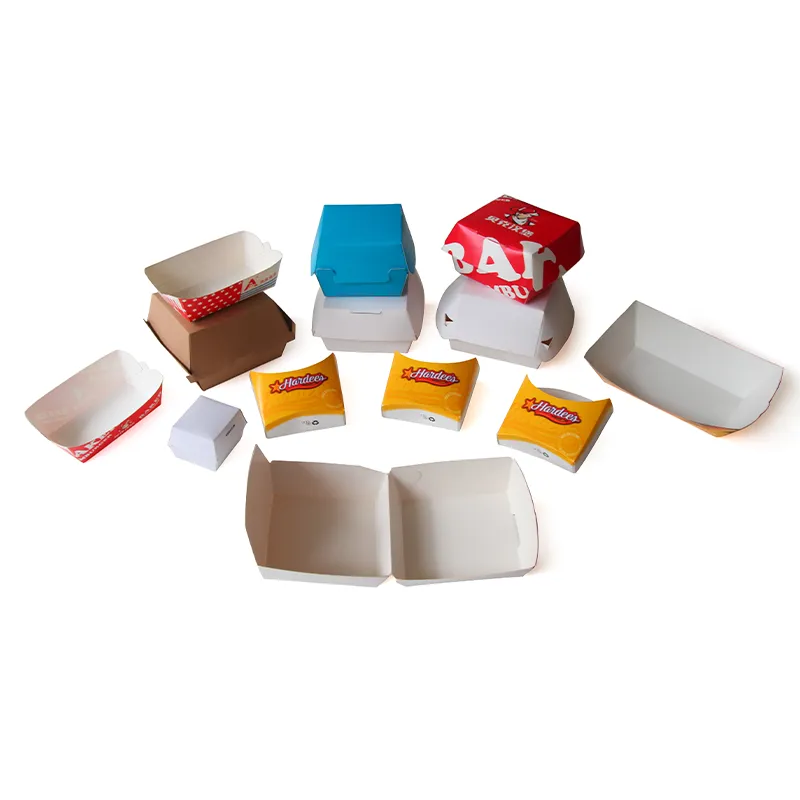
Food-Grade Plastics: Thermal Stability and Regulatory Compliance for Fast Food Box Machines
Material selection in automated packaging demands precision. For Food Box Machines, plastics require unique thermal and regulatory properties to withstand high-speed processing while meeting global food-safety standards.
Heat Resistance and FDA/EFSA Compliance of PP and PETG Under High-Speed Thermoforming
In the world of thermoformed food packaging, polypropylene (PP) and polyethylene terephthalate glycol (PETG) stand out because they hold up well at temperatures between 180 and 220 degrees Celsius. This heat resistance matters a lot since many sealing processes happen in less than half a second. These materials meet all the necessary safety standards set by both the FDA (21 CFR 177.1520) and EFSA Regulation (EU) No 10/2011. Basically, these rules stop harmful substances like phthalates and bisphenols from getting into our food products. When it comes down to choosing between them, PETG wins when clear packaging is needed so customers can see what's inside. On the flip side, PP works better for complex mold designs especially in those high volume production lines where speed counts. Manufacturers need to watch temperature closely too. If things get too hot during processing, the plastic might warp as it cools quickly. For PP, staying under 150 degrees Celsius is key, while PETG needs even cooler conditions around 85 degrees Celsius to maintain its shape properly.
Microwave Safety and Structural Trade-offs: PP vs. PS in Automated Food Box Machines
Polystyrene, or PS as it's commonly called, gives boxes their structural strength but comes with some serious downsides when exposed to heat. When temperatures go above 100 degrees Celsius, the material starts releasing styrene into whatever it contains. The European Food Safety Authority has actually set pretty strict limits on this, only allowing 0.5 parts per million of migration. On the flip side, polypropylene (PP) doesn't have these issues and remains safe even in microwaves up to around 120 degrees without breaking down. What makes PS attractive though is that manufacturers can make walls just 0.3 millimeters thick compared to PP's 0.5 mm requirement, which cuts material expenses by roughly 15%. But there's a catch. Factory floor studies indicate that thinner PS sheets actually cause problems during production, leading to about 22% more machine jams than with thicker materials. And when it comes to sealing performance, PP really shines. Most plants report getting nearly perfect seals with PP at sealing temperatures around 230 degrees, hitting those 99% hermetic seal rates that quality control teams love to see.
Paperboard Solutions: Grease Barrier Performance and Machine-Compatible Coating Technologies
PE, PLA, and PFAS-Free Coatings Balancing Heat Tolerance and Runnability in Food Box Machines
When choosing coatings for paperboard in food box machines, manufacturers need to find the right balance between heat tolerance and how fast they can run production lines. Polyethylene or PE is still pretty common because it blocks grease well and keeps moisture out, holding up even when temperatures reach around 150 degrees Celsius during forming processes. The downside? It can't be recycled which goes against most sustainability targets these days. Then there's PLA made from plant materials that breaks down in industrial composters, but this stuff starts to melt at just 55 degrees Celsius so machine operators have to watch temperatures closely during high speed thermoforming operations. Some newer water-based options without PFAS chemicals offer similar protection against oil while allowing paper recycling, although they take longer to cure which means production lines might need to slow down a bit. Anyone running these machines should check if coatings work properly with their heating systems and adjust timing settings carefully to avoid problems like jams or layers peeling off.
SBS vs. Recycled Board: Moisture Resistance and Feeding Reliability on High-Speed Food Box Machines
What kind of material we use as the base really affects how well automated food box machines work. Solid Bleached Sulfate or SBS board stands out because it resists moisture much better than other options. This stuff only soaks up less than 2% moisture even when humidity is high, which means it feeds reliably through those fast moving conveyor belts. Some systems can actually handle over 200 boxes per minute without issues thanks to this property. On the flip side, recycled board has its advantages since it's better for the environment, but there's a catch. The fibers in recycled material vary quite a bit from batch to batch, and this inconsistency sometimes leads to problems during production runs.
- Thickness fluctuations (up to ±8%)
- Increased dust generation during die-cutting
- Higher misfeed rates above 150 boxes/minute
Machine operators should prioritize recycled board with internal sizing treatments when moisture exposure is limited, reserving SBS for applications demanding maximum humidity resistance. Both substrates require specific feeder adjustments recycled variants often benefit from increased suction pressure to compensate for surface irregularities.
Next-Generation Biocomposites: Integrating PLA, PHA, and Molded Fiber into Fast Food Box Machines
Thermal Parameter Adaptation Temperature, Pressure, and Cycle Time Optimization for Compostable Materials
Working with biocomposites such as Polylactic Acid (PLA), Polyhydroxyalkanoates (PHA), and molded fibers in food box manufacturing needs careful adjustment of heat parameters to keep the materials from breaking down. These compostable options are quite different from regular plastics because they have very limited temperature ranges. For instance, PLA starts to break apart when temperatures go over 180 degrees Celsius, whereas PHA holds together only until about 160 degrees. When running high speed thermoforming processes, getting the temperature right within plus or minus 5 degrees matters a lot to avoid issues like early crystal formation or making the product too brittle. The pressure applied during molding also needs just the right amount of force. Too much pressure might actually tear apart the fiber structures in those molded pulp parts. Getting the timing right for each production cycle is important too, though we'll get into that next section.
- Reduced dwell periods (under 3 seconds) prevent heat degradation in thin-walled containers
- Extended cooling phases ensure dimensional stability for grease-resistant food boxes
Moisture content variations in recycled fiber inputs also alter thermal transfer rates by 15–30%, requiring real-time sensor feedback for consistent output. When properly calibrated, these materials support commercial-scale compostable packaging production at speeds exceeding 60 cycles/minute while meeting ASTM D6400 certification standards.
FAQ Section
What are the main types of food-grade plastics used in fast food box machines?
Polypropylene (PP), polyethylene terephthalate glycol (PETG), and polystyrene (PS) are commonly used due to their thermal stability and compliance with food safety standards.
Why is thermal stability important for food box machines?
Thermal stability is crucial as it ensures the material can withstand high-speed processing temperatures without degrading or leaching harmful substances into the food.
What role do coatings play in paperboard solutions?
Coatings such as polyethylene (PE) and PLA enhance grease barrier performance and heat tolerance, ensuring the paperboard can effectively protect food items during packaging and transportation.
Table of Contents
- Food-Grade Plastics: Thermal Stability and Regulatory Compliance for Fast Food Box Machines
- Paperboard Solutions: Grease Barrier Performance and Machine-Compatible Coating Technologies
-
Next-Generation Biocomposites: Integrating PLA, PHA, and Molded Fiber into Fast Food Box Machines
- Thermal Parameter Adaptation Temperature, Pressure, and Cycle Time Optimization for Compostable Materials
- FAQ Section
- What are the main types of food-grade plastics used in fast food box machines?
- Why is thermal stability important for food box machines?
- What role do coatings play in paperboard solutions?