
 EN
EN
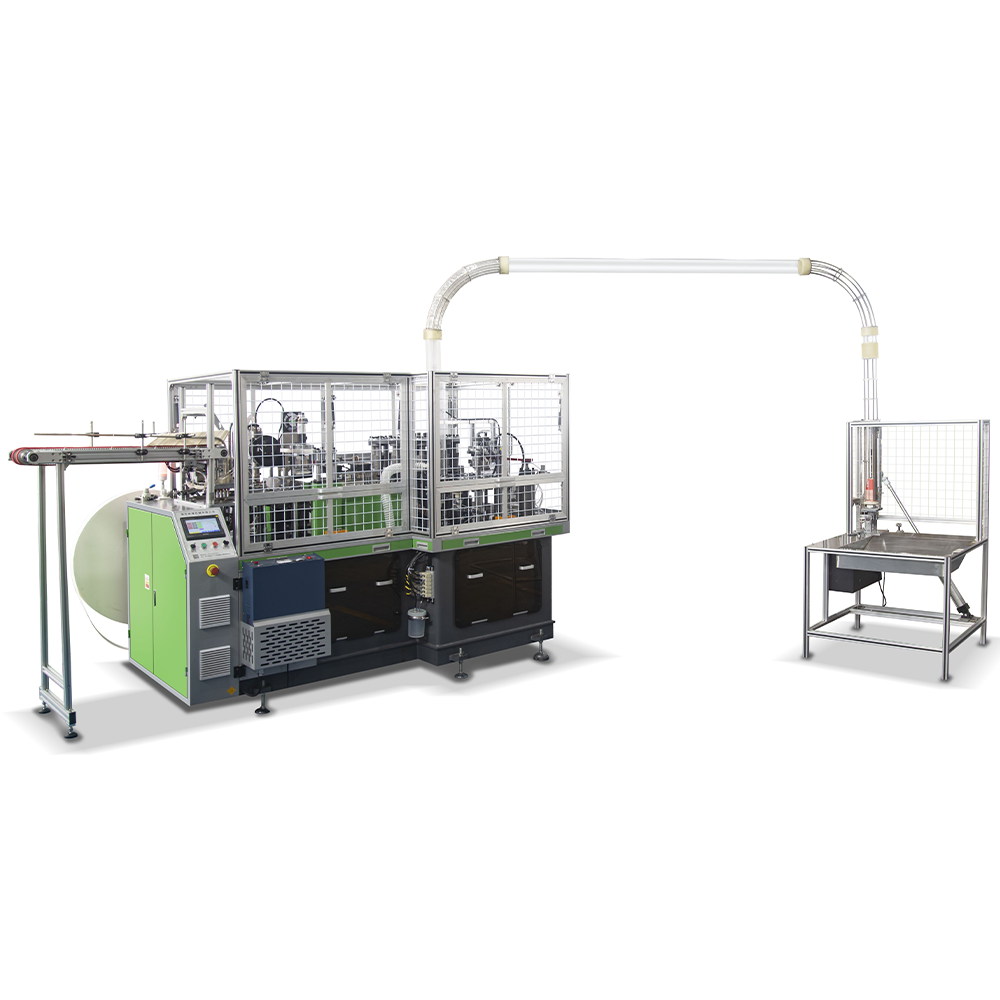
The global demand for sustainable food packaging has accelerated technical advancements within the container manufacturing sector. When factory owners setup new production lines, evaluating the difference between high speed and standard paper cup machines is essential for optimizing capital investment and matching market demand. While both types of equipment share the foundational objective of forming robust paper containers, they utilize completely distinct mechanical architectures, control frameworks, and structural designs. Selecting between these two categories determines not just daily factory output, but also direct labor efficiency, long-term maintenance overhead, and total energy consumption metrics within competitive manufacturing environments.
Structural Frame Durability and Mechanical Kinematics
The fundamental engineering contrast between premium and conventional equipment lies in the structural framework and the underlying drive mechanism. A premium high speed paper cup machine shifts away from the traditional, complex chain-drive systems found in standard models, instead adopting an integrated cylindrical open-cam distribution framework. This advanced open-cam configuration utilizes heavy-duty longitudinal shafts and high-precision gear connections to synchronize operations. By enclosing the primary mechanical gears within an automated, continuous oil lubrication system, the machinery minimizes component friction, reduces structural vibration, and ensures smooth operation during extended, continuous production runs.
Advanced Heating and Bottom Sealing Technologies
A critical quality bottleneck in container production is achieving a flawless, leak-proof seal at the bottom and side seams. Standard machinery typically relies on conventional heating elements that require longer contact times, which restricts the overall processing pace. In contrast, an advanced high speed paper cup machine integrates premium hot-air blowing systems or Swiss-engineered heating components to deliver rapid, localized thermal energy. This instantaneous heat transfer allows the polyethylene or polylactic acid coatings on the paperboard to bond securely without scorching the underlying cellulose fibers, guaranteeing structural integrity even during rapid container formation sequences.
Automated Inspection Integration and Quality Control
Maintaining a minimal defect rate becomes increasingly challenging as production velocities accelerate. Standard forming machines usually depend on periodic manual sorting by operators at the collection table, which can allow minor cosmetic or functional flaws to pass undetected. To resolve this limitation, a modern high speed paper cup machine incorporates advanced charge-coupled device (CCD) camera inspection networks directly onto the collection line. These automated optical sorting systems scan every finished container in real-time, instantly identifying and automatically ejecting units with inner dirt, bottom stains, rim deformation, or side-seam sealing misalignments.
PLC Automated Controls and Operation Simplicity
The electrical architecture and human-machine interface significantly influence daily operational uptime and troubleshooting efficiency. Traditional manufacturing setups often feature separate manual switches and basic relays, which demand constant monitoring and highly specialized mechanical adjustments from senior operators. A sophisticated high speed paper cup machine utilizes centralized programmable logic controller (PLC) systems paired with responsive digital touchscreens. This integration enables digital tracking of processing phases, automated multi-point fault detection, and digital speed adjustments, allowing operators with standard technical training to manage multiple production lines simultaneously.
Total Power Consumption and Long-Term ROI
Evaluating the initial machinery purchasing cost against long-term operating expenses is a core requirement for factory procurement managers. Although standard equipment requires a lower initial capital investment, it often exhibits higher energy consumption per unit due to mechanical friction and less efficient heating configurations. An optimized high speed paper cup machine leverages high-efficiency variable frequency synchronous motors and precise thermal management to lower per-cup energy usage. The massive spike in daily throughput combined with reduced labor and power costs allows high-output manufacturers to achieve a much faster return on investment.