
 EN
EN
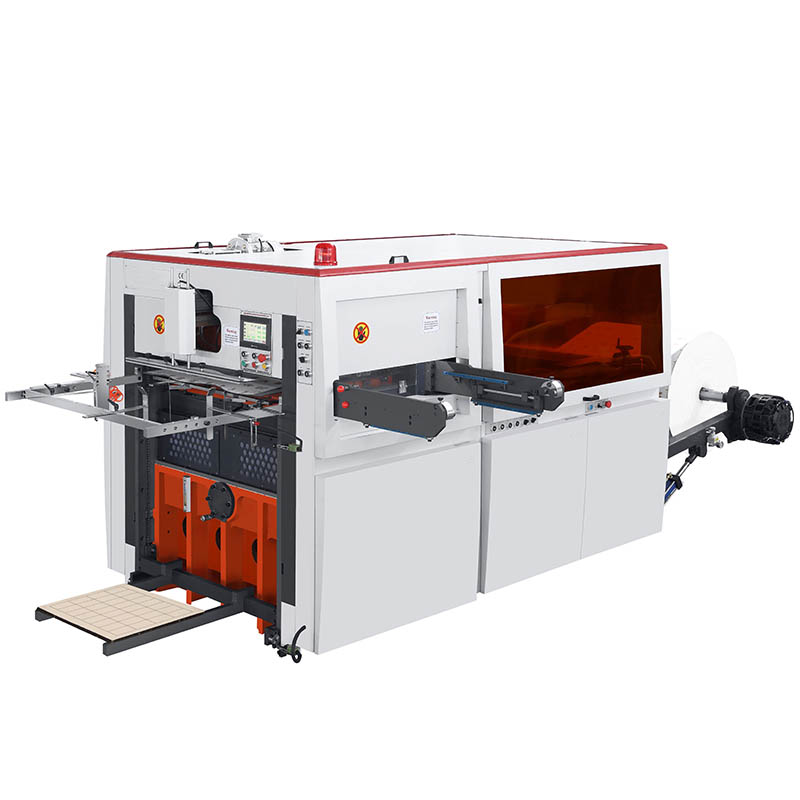
Selecting the right roll die cutting machine is critical for packaging production lines focused on paper plates, food trays, lunch boxes, and disposable paper containers. The machine directly affects production speed, product consistency, operational cost, and long-term return on investment. For manufacturers producing eco-friendly paper food packaging, a well-matched roll die cutting machine ensures stable output, compliance with quality standards, and compatibility with downstream forming equipment. This guide uses practical industry experience, technical expertise, and verified manufacturer data to help you make an informed choice.
Understand Your Packaging Material & Product Types
The first step in choosing a roll die cutting machine is to clarify the materials and products you produce. Common packaging materials include coated paper, food-grade cardboard, and eco-friendly biodegradable paper, typically used for paper plates, food trays, cake trays, rectangular trays, and fast-food boxes.
Different products require different die-cutting precision and sheet sizes. For example, high-speed paper plate production needs stable roll feeding and clean cutting, while food box production demands accurate dimensional consistency for seamless forming. Matching the machine to your material thickness, roll width, and product shape avoids jams, rough edges, and excessive waste.
Based on real production experience from packaging machinery manufacturers, material compatibility is the foundation of efficient die cutting. Using a machine not designed for your paper type will lead to high rejection rates and increased maintenance.
Match Production Speed to Your Line Capacity
Production speed is a core parameter when selecting a roll die cutting machine. You must align die-cutting speed with the capacity of your paper forming, curling, and box-making machines to prevent bottlenecks.
Leading manufacturers offer models with stable speed ranges for different production scales. For medium to high-output lines, speeds between 160–200 pieces per minute are common for integrated food box and tray production. Dual-lane high-speed configurations can reach 200–300 pieces per minute, suitable for large-scale mass production.
Choosing a speed that matches your real output avoids underutilization or overload. Practical factory experience shows that running a die cutter beyond its stable speed range reduces precision and shortens service life.
Prioritize Drive System & Electrical Components
The internal configuration determines durability, stability, and maintenance cost. High-quality roll die cutting machines use full servo motor driving systems for precise control and smooth operation.
Reliable manufacturers partner with internationally recognized electrical brands such as Schneider, Siemens, Delta, Omron, Mitsubishi, ABB, and SMC. These components improve accuracy, reduce failure rates, and support long-hour continuous production.
From a technical perspective, servo-driven die cutters provide better tension control, faster response, and lower energy consumption than conventional mechanical models. This expertise helps buyers distinguish entry-level from industrial-grade machines.
Check Certifications & Quality Compliance
Certifications reflect product safety and export eligibility. Trustworthy roll die cutting machine manufacturers hold CE certification for machinery compliance and SGS audit reports for production and quality control.
Certified machines meet EU health, safety, and environmental protection standards, which is essential for exporters. Reputable enterprises also hold multiple technical patents for die cutting and forming structures, proving independent R&D capability.
Transparent display of patents, test reports, and certification numbers enhances credibility. Authoritative third-party verification ensures the machine performs as claimed.
Evaluate After-Sales & One-Stop Solution Support
After-sales service and integrated solutions matter for long-term use. Leading equipment suppliers provide one-stop packaging production line solutions including printing, die cutting, forming, and curling.
This support simplifies installation, commissioning, training, and maintenance. Manufacturers with global service networks can assist customers in over 100 countries, ensuring fast troubleshooting and stable production.
Practical user experience shows that comprehensive after-sales reduces downtime and extends equipment life better than low-price purchases without support.
Conclusion
Choosing the right roll die cutting machine requires balanced consideration of material compatibility, production speed, component quality, certifications, and after-sales support. By combining real production experience, professional mechanical knowledge, authoritative certification data, and transparent manufacturer information, you can select a reliable, efficient, and cost-effective device that improves your packaging production. Prioritize verified performance and long-term stability over superficial parameters for sustainable output.