
 EN
EN
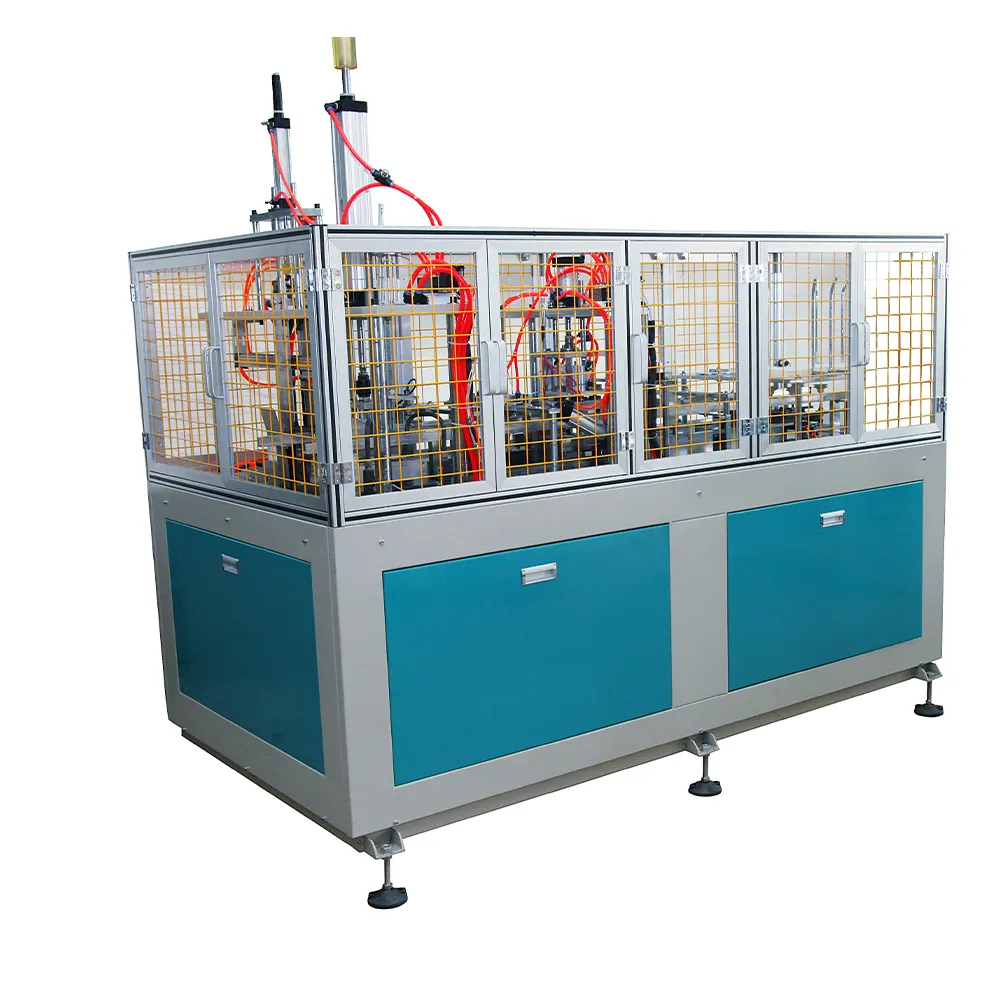
Identify Key Waste Points in Paper Glass Making Machine Production
In real production environments, material waste in a paper glass making machine is rarely caused by a single issue. Based on practical factory observations, the most common waste points occur during paper feeding, forming, sealing, and cutting stages. Even a small deviation in paper alignment can result in defective cups or glasses that cannot be reused.
For example, during high-speed operation, unstable paper feeding often leads to edge misalignment. This causes inconsistent forming and increases rejection rates. Similarly, improper sealing temperature can create weak bonding, resulting in leakage or structural failure. Identifying these specific waste points allows manufacturers to take targeted actions rather than relying on general adjustments.
Optimize Machine Parameters to Reduce Material Loss
One of the most effective ways to reduce waste in a paper glass making machine is through precise parameter control. Temperature, pressure, and production speed must be carefully balanced to match the material specifications and machine design.
From operational experience, many factories initially set higher speeds to increase output, but this often leads to higher defect rates. By slightly reducing speed and synchronizing it with heating and forming cycles, overall efficiency can actually improve. In one production case, adjusting sealing temperature and dwell time reduced material waste by improving product consistency.
It is recommended to establish standard parameter settings based on trial runs and maintain consistency across shifts. This ensures stable performance and minimizes unnecessary material loss.
Select Suitable Raw Materials for Better Compatibility
Material selection directly impacts the efficiency of a paper glass making machine. Not all paper rolls perform equally under the same machine conditions, and mismatched specifications can lead to frequent defects.
Key factors to consider include paper thickness, coating quality, and stiffness. If the paper is too thin, it may tear during forming. If it is too thick, it can cause feeding issues or incomplete shaping. Inconsistent coating can also affect sealing quality.
Working with reliable suppliers and maintaining consistent material standards is essential. Testing materials before large-scale production can significantly reduce trial waste and improve overall production stability.
Strengthen Preventive Maintenance and Operator Skills
Machine condition and operator expertise are critical factors in reducing waste. Even a well-designed paper glass making machine will produce excess scrap if maintenance is neglected or operators are not properly trained.
Regular inspection of molds, heating components, and feeding systems helps prevent unexpected failures. For instance, worn molds can lead to uneven forming, increasing rejection rates. Replacing these components at the right time is a cost-effective way to reduce waste.
Operator training is equally important. Skilled operators can quickly identify abnormal machine behavior, such as vibration, misalignment, or inconsistent sealing, and take corrective actions before defects escalate. This proactive approach significantly improves production efficiency.
Use Automation and Monitoring to Improve Accuracy
Modern paper glass making machine systems increasingly incorporate automation features that help reduce material waste. Automatic paper alignment, sensor-based monitoring, and real-time adjustments can significantly improve production accuracy.
For example, alignment control systems ensure consistent feeding, while defect detection systems help identify problems early in the process. Even without advanced automation, manufacturers can track production data such as defect rates and material usage to identify inefficiencies.
Data-driven adjustments allow manufacturers to continuously refine their processes and reduce waste over time, making production more predictable and efficient.
Apply Continuous Improvement Strategies for Long-Term Efficiency
Reducing waste in a paper glass making machine is not a one-time task but an ongoing optimization process. Successful manufacturers continuously monitor key performance indicators such as material utilization rate and defect percentage.
In practical applications, small improvements—such as optimizing cutting layouts, improving storage conditions for raw materials, or standardizing operating procedures—can lead to significant long-term gains.
By combining technical optimization, proper material selection, and skilled operation, manufacturers can achieve stable production with lower material waste and higher profitability.
Table of Contents
- Identify Key Waste Points in Paper Glass Making Machine Production
- Optimize Machine Parameters to Reduce Material Loss
- Select Suitable Raw Materials for Better Compatibility
- Strengthen Preventive Maintenance and Operator Skills
- Use Automation and Monitoring to Improve Accuracy
- Apply Continuous Improvement Strategies for Long-Term Efficiency