
 EN
EN
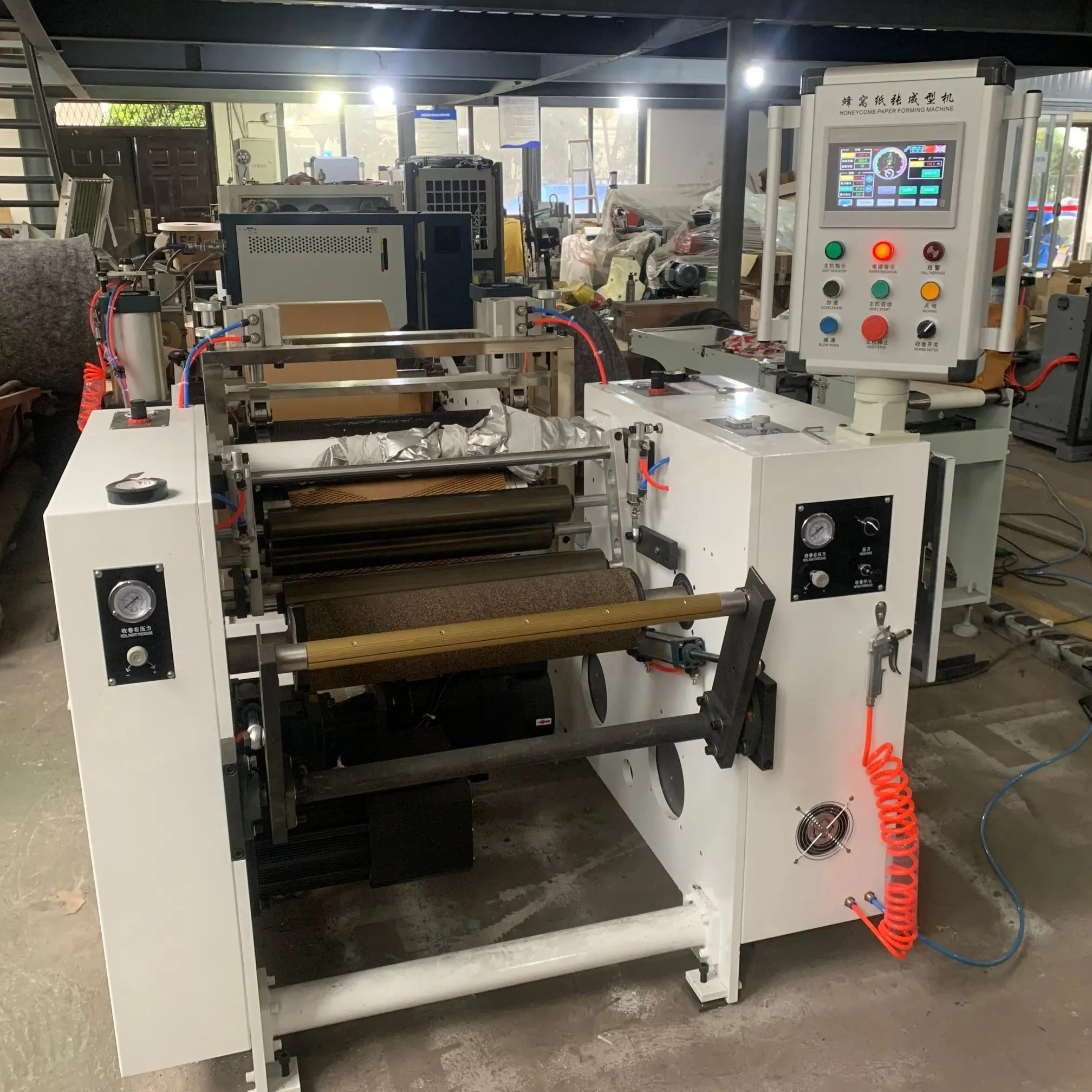
The production of honeycomb paper is a sophisticated engineering feat that transforms simple kraft paper into a high-strength, eco-friendly structural material. At Bonjee Machine, our honeycomb paper making machines are designed to integrate high-speed automation with precision tension control, ensuring that every hexagonal cell meets the rigorous demands of the packaging and construction industries. This guide breaks down the core phases of the production line, reflecting our hands-on experience in commissioning these systems globally.
Raw Material Preparation and Precision Multi-Roll Unwinding
The efficiency of a honeycomb paper making machine begins at the unwinding station. High-quality honeycomb structures require the simultaneous feeding of multiple paper webs—typically kraft paper ranging from 110gsm to 180gsm. Our machinery utilizes an automated multi-roll unwinding system equipped with magnetic powder brakes. This setup maintains constant tension across all layers, which is critical because any slack during the feed phase results in uneven cell formation. Based on our field installations, precise tension synchronization can reduce material waste by up to 15%, ensuring the paper enters the next phase perfectly aligned.
High-Speed Glue Spraying and Longitudinal Line Application
Once the paper is stabilized, the "honeycomb" logic is applied through strategic adhesive distribution. The machine uses a specialized glue spreading system that applies parallel lines of adhesive at calculated intervals. The spacing between these lines determines the cell size—common industry standards include 10mm, 15mm, or 20mm cells. It is essential to use a high-viscosity, fast-drying adhesive to ensure the layers bond instantly when pressed. In our technical audits, we have found that utilizing a stainless steel glue roller system significantly improves the uniformity of the lines compared to traditional rubber rollers, preventing "dry spots" that could cause structural failure in the final core.
Layer Lamination and Synchronous Compression
After the glue is applied, the multiple sheets of paper are laminated together. The honeycomb paper making machine passes these layers through a series of heavy-duty pressing rollers. This stage is where the "stack" is formed. The pressure must be calibrated to ensure the glue penetrates the fibers without crushing the paper itself. Our systems often incorporate a heated laminating section, which accelerates the curing process of the adhesive. This allows the machine to maintain a high production speed—often reaching linear speeds of 20 to 40 meters per minute—without risking the integrity of the bond.
Precision Horizontal Cutting and Core Expansion
The laminated paper block is then fed into the horizontal cutting unit. Unlike standard paper cutters, this component must handle the immense thickness of the bonded stack with surgical precision. Our machines utilize a high-speed PLC-controlled blade that slices the stack into specific widths, which eventually become the "height" of the honeycomb core. A common technical requirement we see from clients is a cutting tolerance of within $\pm 0.5$ mm. Once sliced, the strips are expanded. This transformation from a flat stack to a hexagonal grid is the most visually striking part of the process, revealing the material's high strength-to-weight ratio.
Drying, Setting, and Final Product Quality Control
The final phase involves passing the expanded core through a drying tunnel. Removing residual moisture from the adhesive is vital to ensure the honeycomb structure remains rigid and does not collapse during storage. We implement infrared (IR) or hot air circulation systems to achieve uniform drying. From a quality assurance perspective, the "Trustworthiness" of the output is verified by testing the flat crush strength. A well-manufactured core from a honeycomb paper making machine should exhibit a compressive strength capable of replacing traditional expanded polystyrene (EPS) foam, making it a sustainable choice for heavy-duty protective packaging.