
 EN
EN
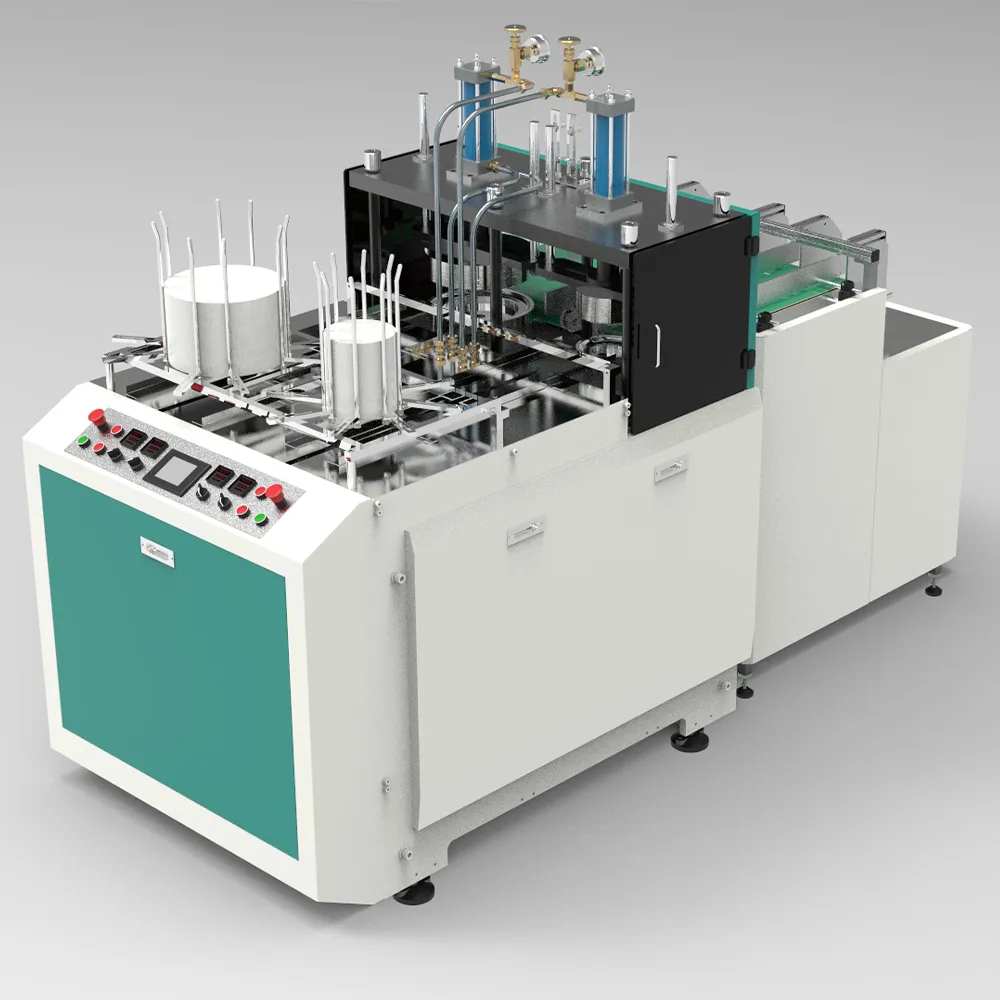
Core Stages of the Paper Plate Machine Production Process
Raw material feeding and consistency control for stable paper plate machine operation
Getting the pulp feeding right along with proper moisture control makes all the difference at the start of the process. Keeping pulp density around those 4 to 6 percent solids marks helps avoid nasty jams and ensures plates come out consistently thick throughout. The automated viscosity sensors work their magic by constantly tweaking water levels as needed, which keeps things flowing smoothly at about 120 to 150 kg per hour. Special temperature controlled tanks keep fibers from getting damaged during storage, and those pneumatic conveyors do a great job sweeping away any pesky air pockets that might cause problems later on. What this whole setup does is cut down on wasted materials by roughly 18% when compared to old fashioned manual methods. For manufacturers looking to maintain steady production without constant interruptions, these systems really lay down a solid base to build upon.
Thermal forming optimization: balancing cycle time, energy use, and plate structural integrity
Getting thermoforming right depends on finding just the right mix of heat and pressure. These days most modern equipment uses infrared heating between 180 to 220 degrees Celsius combined with hydraulic presses operating around 25 to 40 megapascals. The really impressive part? Some systems can complete a cycle in under 2.5 seconds per plate while still hitting nearly 95% energy efficiency thanks to those clever regenerative heat exchangers. When it comes to mold design, getting the geometry right makes all the difference. It stops fibers from burning during processing and keeps wall thickness consistent across the board, typically staying within that sweet spot of 0.3 to 0.5 millimeters. Manufacturers have found this careful balancing act results in plates that stand up to crushing forces about 15% better according to ASTM D6198 tests, and they can still crank out over 80 units every minute without slowing down production.
Precision trimming and finishing: minimizing scrap and ensuring dimensional accuracy
The laser guided rotary cutters we've been testing achieve really impressive precision down to about 0.1 mm tolerance. Our machines have these special vibration dampened servo motors that help smooth out edges even when running at 3000 RPM speeds. We've noticed this cuts down on those tiny micro tears by roughly 22%, which makes a big difference in quality control. For spotting bad plates, our real time vision system catches almost all of them with around 99.7% accuracy. And don't forget about our vacuum conveyors that grab back about 98% of the trim waste so it can go straight back into the pulp stream. Putting all these together gives us a finishing process that meets all the international standards for food packaging materials. Plus, we're talking about practically no material getting lost during our large scale production runs these days.
Maximizing Paper Plate Machine Uptime and Utilization
Diagnosing top causes of unplanned downtime in high-speed paper plate machines
Most unplanned downtime comes down to three main issues that tend to feed into each other: problems with how materials are handled, normal wear on machinery, and mistakes made during operations. When it comes to material jams specifically, these happen because paper stock can vary so much in moisture content or how strong it is when pulled apart. These kinds of jams actually account for more than a third of all production stops according to industry data. Mechanical breakdowns usually occur in parts like forming dies and cutting units, mostly because they don't get enough lubrication or just wear out after running nonstop for long periods. Human error remains a big problem too. Things like setting pressures wrong or not reacting fast enough when something gets stuck cost companies about 20% in lost productivity annually. Fortunately, implementing real time vibration sensors along with automatic quality checks on incoming stock materials has been shown to cut these kinds of interruptions nearly in half in many facilities across the country.
Predictive maintenance strategies tailored to paper plate machine components
Predictive maintenance leverages embedded IoT sensors to monitor performance trends and schedule interventions before failure occurs:
- • Thermal forming units: Infrared sensors detect heater band degradation early, preventing temperature deviations that cause warping
- • Cutting blades: Acoustic emission detectors identify dullness before dimensional inaccuracies emerge
- • Hydraulic systems: Oil viscosity sensors flag fluid breakdown risks, avoiding pressure drops mid-cycle
This data-driven approach cuts reactive repairs by 60%, extends equipment lifespan, and improves energy efficiency through optimized cycle timing.
Lean Integration to Eliminate Waste in Paper Plate Manufacturing
Value stream mapping of the paper plate machine workflow to expose bottlenecks and non-value steps
Value stream mapping, or VSM for short, gives manufacturers a clear picture of how their paper plate machines actually work from start to finish. When companies map out where materials go and how information moves through the system, they often find problems nobody saw before. Sometimes there's just too much stock sitting around between the forming and trimming parts of the process. Other times quality checks get repeated unnecessarily because the thermal forming isn't consistent enough. Most factories end up finding somewhere between 15 and 30 percent improvement potential when they look closely at how long each step takes and spot all those wasted movements, like when workers have to manually move plates from one station to another instead of having them automatically transferred.
Targeted interventions include:
- • Eliminating transport waste by relocating trimming units adjacent to forming presses
- • Reducing motion waste via ergonomic workstation redesign
- • Standardizing changeover procedures to cut downtime by 40–60%
- • Automating scrap removal to reclaim 7–12% of otherwise lost material
When combined with 5S (Sort, Set, Shine, Standardize, Sustain), VSM fosters a culture of continuous improvement. Real-time performance dashboards at critical control points accelerate problem resolution by 20%, with the greatest impact realized at cross-departmental handoffs—where 68% of delays originate, per lean manufacturing studies.