
 EN
EN
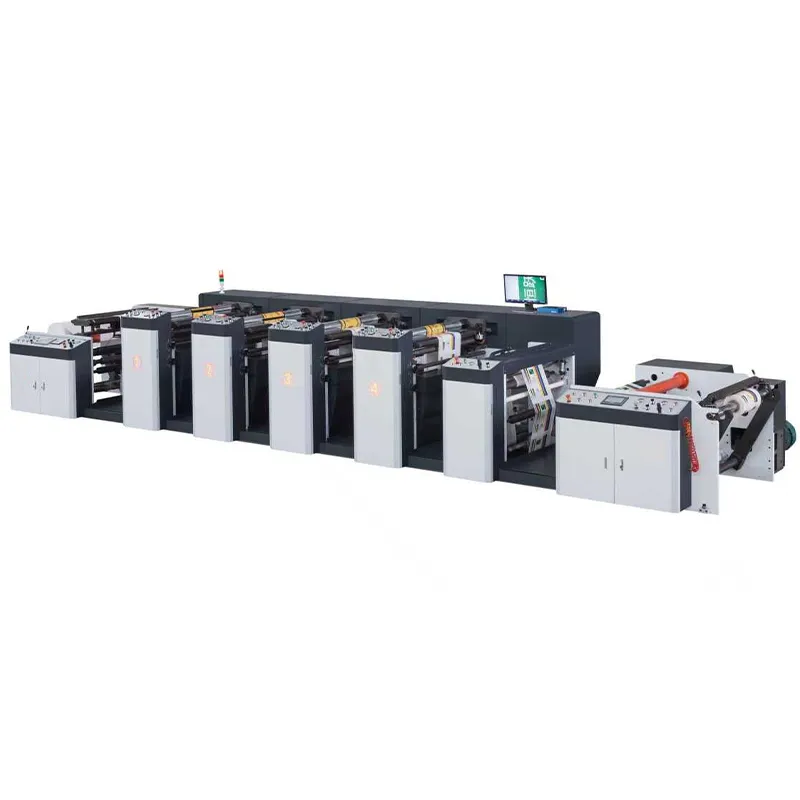
Match Flexo Printer Type to Your Packaging Substrate and Application
Central Impression (CI) Flexo Printers for Multi-Layer Flexible Packaging
For multi layer films and laminates work, most people go with Central Impression or CI flexo printers because of how they're built around a single cylinder. This setup really helps keep things aligned properly even at those super fast speeds. The design actually reduces stretching and warping problems which matters a lot when working with stuff like polyethylene that gets sensitive to heat. Another thing worth mentioning is the enclosed print area. It stops the ink from drying out too soon, something that becomes pretty important when dealing with solvent based inks on surfaces that don't absorb much. Factory reports show that switching jobs takes about 40 percent less time than with traditional stack type machines. That means less wasted material over longer production periods, which makes these printers quite attractive for many operations.
Stack vs. Inline Flexo Printers: Stability on Variable-Thickness Substrates Like Corrugated and Foil
Stack type flexo printing machines provide better mechanical stability when working with tough or irregular surfaces like corrugated cardboard and metal foils. These printers have separate print stations arranged vertically which helps reduce vibrations and can handle material thickness differences over 2mm without losing registration accuracy something that inline systems often struggle with. The vertical arrangement of the web is particularly useful when printing metallic inks on foil surfaces because it stops ink from collecting in one spot and ensures even coverage across the entire surface area. While inline models do take up less space and generally come at a lower initial investment cost, they simply don't match stack type printers when it comes to controlling tension levels or adapting to heavy duty materials that might vary quite a bit in thickness during production runs.
Prioritize Critical Operational Capabilities for Consistent Packaging Output
Precision Web Tension Control and Integrated Drying for High-Speed Film and Lamination Runs
Keeping the web moving consistently is really important for good flexo printing results, particularly when working with materials like plastic films, metal foils, and layered products. When tension varies more than 1% either way, problems start happening fast registration issues, wrinkles forming, or worse yet actual web breaks. These days most advanced machines have those fancy closed loop servo systems that constantly monitor what's going on and tweak the nip rollers and unwind brakes as needed. This helps keep things stable even when speeding up to around 1500 feet per minute. The drying process matters too whether it's infrared heating or blowing hot air across the material. Getting this right is critical because if there's not enough drying time, ink might transfer onto other parts of the roll later. But go too far with drying and thin films like BOPP will start curling up instead of staying flat. When operators get these two aspects working together properly, they can run their laminating processes without defects and actually boost production speeds by about 20% compared to older equipment setups.
Servo-Driven Registration Systems: Minimizing Waste in Dynamic Packaging Production
The shift to servo-driven registration systems means saying goodbye to all that manual fiddling with traditional gear setups. Setup times drop significantly and waste gets cut down, especially when dealing with those tricky short runs where product mixes change constantly. These modern systems rely on encoder feedback to handle material stretch issues, manage splices between different materials, and adjust for temperature changes as they happen. The result? Registration stays tight within about 0.1 mm even when switching jobs mid-production run. Corrections happen almost instantly across both axes, which makes a big difference when printing on challenging surfaces like corrugated cardboard that varies in thickness throughout. According to what manufacturers are seeing in the field, companies typically report around 15 to 20 percent less waste overall. Plus there's the added benefit of being able to print finer details without worrying about dots spreading out too much, something that becomes really important at screen rulings up to 200 lines per inch.
Optimize Print Quality Through Key Flexo Printer Components
Anilox Roll Selection—Cell Geometry and Volume for Spot Color Accuracy on Foil and Plastic Films
The specs of anilox rolls really matter when it comes to getting consistent colors right across the board. When working with foils that need metallic inks, most printers go for rolls between 800 and 1,200 lines per inch with shallow volumes around 20 to 24 BCM. This setup helps maintain good opacity without messing up the dots too much, especially important since these shiny surfaces tend to show any gain issues pretty clearly. Plastic films such as BOPP demand something different though. Higher resolution rolls above 1,500 LPI work better here, particularly those with hexagonal cells that keep color deviations under ±0.2 Delta E. Studies from various printing houses suggest that about two thirds of all color problems on non porous materials come down to wrong anilox volume matching. Getting the cell geometry right matters a lot too. Most experienced operators know that UV inks respond well to engraving angles around 60 degrees, whereas water based inks typically need shallower 30 degree channels to release cleanly from the substrate without leaving behind residue or causing mottling.
Plate Mounting Precision and Cylinder Compatibility for Repeat-Length Consistency
Getting plates mounted correctly matters a lot for keeping repeat lengths consistent and maintaining stable registration over long print runs. Small issues like compressed mounting tape or cylinder runout problems can lead to those annoying bands showing up on printed materials, particularly when there's a mismatch between plate repeat length and cylinder circumference. We've seen this happen in about 9 out of 10 banding cases actually. Industry pros recommend using magnetic lock systems instead of traditional tapes to cut down on variables. Always check cylinder total indicator reading stays under 0.025 mm before starting any job too. Digital registration tech helps keep plate-to-impression gaps properly synchronized across different substrates. Major packaging companies report around 19% less waste when switching between materials thanks to these methods according to their own operational benchmarks.
FAQs
What is the advantage of using Central Impression (CI) flexo printers for multi-layer films?
CI flexo printers are ideal for multi-layer films due to their single cylinder design, which maintains alignment at high speeds and reduces stretching and warping, especially important when working with sensitive materials like polyethylene.
How do stack flexo printers differ from inline flexo printers?
Stack flexo printers provide better mechanical stability and are suitable for thick or variable-thickness substrates, while inline models are more compact and less costly, but may struggle with tension control and thicker materials.
Why is precision web tension control necessary in flexo printing?
Consistent web movement is critical to prevent issues like registration errors or web breaks. Modern machines often use closed loop systems to maintain stability and improve production speeds.