
 EN
EN
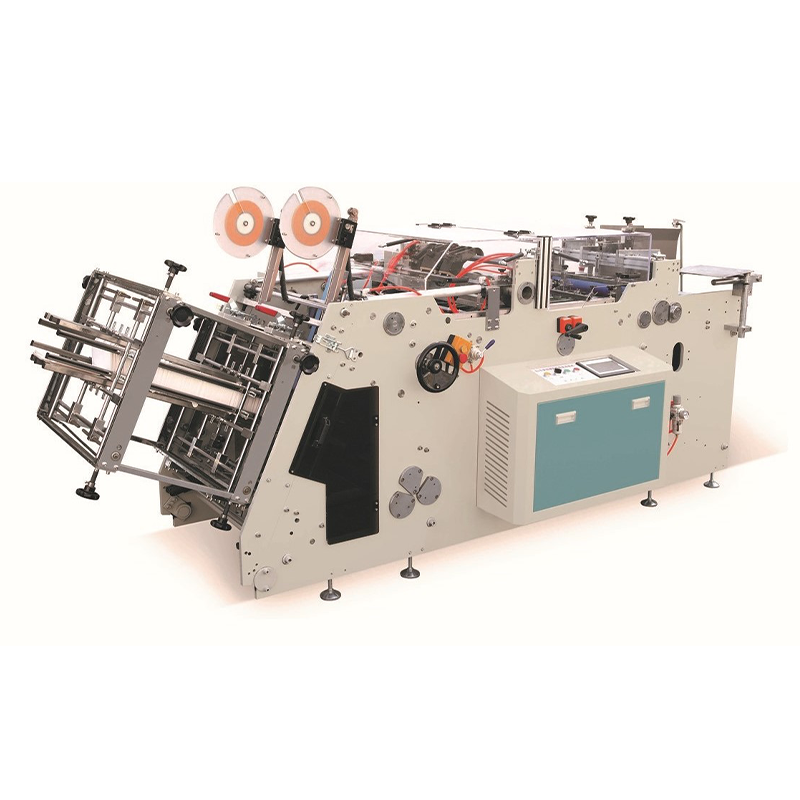
For any business in the food packaging industry, the hamburger box machine is the cornerstone of efficiency. Balancing high output with consistent quality is the primary challenge for operators. Understanding how to adjust production speed is not just about pressing a button; it involves synchronizing mechanical components, raw materials, and control systems. Wenzhou Bonjee Machinery Co., Ltd., a high-tech enterprise with over 30 technical patents and CE/SGS certifications, has engineered its equipment to offer flexibility. Below are the key methods and principles for adjusting the speed of a hamburger box machine to optimize your production line.
The Foundation: PLC and Servo System Adjustments
Modern hamburger box machines, like those from Bonjee which utilize renowned electrical brands such as Schneider, Siemens, and Delta, rely heavily on Programmable Logic Controllers (PLC). The primary method for speed adjustment is via the touch screen interface connected to the PLC. By changing the "Production Speed" parameter, the PLC sends precise signals to the servo motors controlling the forming mold. Unlike old cam systems, servo motors allow for stepless speed adjustment within the machine's mechanical range (typically 60–160 pieces/minute depending on the model and box complexity). To increase speed, simply input a higher value into the system; however, the machine should be ramped up gradually to prevent paper jams.
Matching Speed with Raw Material Specifications
The speed of your hamburger box machine is intrinsically limited by the paper you feed into it. Before increasing the production rate, you must check the material specifications. Bonjee machines generally handle paper board ranging from 200 GSM to 600 GSM and corrugated paper up to 1.5mm thick. Lighter paper (200-300 GSM) can run at the higher end of the speed spectrum (closer to 160 pcs/min) because it bends and cuts easily. Heavier paper (400-600 GSM) requires slower speeds to ensure the scoring, folding, and gluing mechanisms complete their actions accurately. If you attempt to run heavy kraft paper at maximum speed, you will likely experience misfeeds or improper sealing.
Mechanical Timing and Forming Mold Adjustments
Speed is not purely electronic; it is mechanical. The "Forming Unit" of the machine relies on a cam or servo-driven action to push the paper into the mold shape. To adjust for high-speed operation, operators must verify the "dwell time" – the moment the mold holds the paper to form the box corners. On Bonjee machines, the mechanical structure is designed for firmness and low noise, but if you increase the main speed, you must ensure the heating (if applicable) and gluing timers are adjusted via the PLC to match. For high-speed production, reduce the dwell time to a minimum, provided the glue still sets properly. The machine’s collecting unit also has a counting sensor; if the speed is too high, the counting sensor may miscount, requiring a sensitivity adjustment.
Gluing System Synchronization
Every hamburger box machine has a glue unit, which is often a bottleneck for speed. Bonjee machinery uses precise water-based glue systems. When adjusting production speed from 60 to 160 pieces per minute, the glue flow rate must be adjusted simultaneously. If the machine runs faster, the glue roller must spin faster to apply enough adhesive before the paper reaches the folding station. Conversely, if the glue is applied too thickly at high speed, it may squeeze out of the seams. Operators should look for a "glue tracking" feature in the PLC menu, which automatically increases pump pressure as the main motor speed increases.
The "Paper Feeding" Timing Calibration
The feeder is the heart of speed stability. On high-end Bonjee machines, the feeding unit operates via vacuum suction and a mechanical rack. If you are experiencing speed fluctuations, the issue often lies in the "Paper Feeding" delay. At low speeds (60 pcs/min), the suction head holds the paper longer. At high speeds (160 pcs/min), this hold time must be reduced to fractions of a second. Additionally, the "Double Sheet Detector" must be calibrated for speed. At high speeds, static electricity can cause two sheets to stick together; the sensor must be sensitive enough to detect this without stopping the line falsely.
Optimizing the Collection and Counting Unit
Finally, increasing the speed of the forming unit is useless if the collection unit cannot keep up. The finished products are ejected onto a conveyor belt. As speed increases, the belt speed must increase to prevent boxes from piling up and crushing each other. The counter (pre-set to batch quantities) relies on photo-eye sensors. At high speeds (100+ pcs/min), the photo-eye needs a "response time" adjustment. If the response time is set too slow, the machine will miss counts. If set too fast, sunlight or vibration might trigger false signals. Adjust the debounce setting in the PLC to match the high-speed production rhythm.